Industry
Below-the-line labour is where a production actually is
The people whose names run past at speed are the majority of the workforce and the majority of the budget.
The options around film crew labour are set out side by side below, with the conditions that genuinely favour one over the other.
The difference in one place
- Crew substantially outnumber cast on almost every production.
- Long hours and short turnarounds are a persistent and documented safety issue.
- Union agreements set the conditions that individual negotiation cannot.
The credits are the workforce
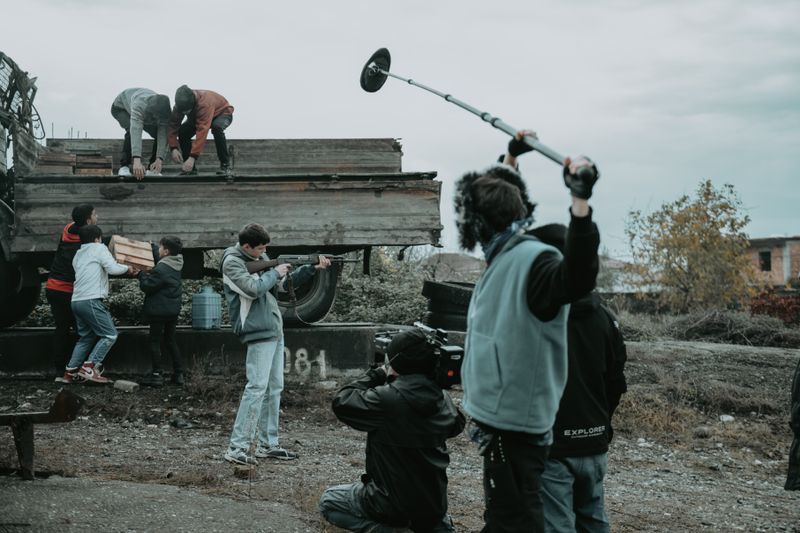
A mid-sized production employs hundreds of people across construction, electrical, camera, grip, costume, hair and makeup, art department, transport, catering and post-production. These are skilled trades with long training paths, and they represent the bulk of both the headcount and the spend. Public discussion of film focuses almost entirely on the small fraction whose names appear at the start.
Understanding a production means understanding that the shoot is a large temporary construction and logistics operation.
Hours are the central labour issue
Twelve-hour shooting days are standard and longer days are common, with short turnarounds between them. Fatigue-related road accidents travelling home from set have been a documented and repeatedly raised safety concern. This is the issue that has driven most recent industrial action, ahead of pay in several disputes.
In practice, turnaround is the part that compounds, because a short gap between wrap and the next call carries yesterday's fatigue into today and accumulates across a week that has no rest day in it.
Union agreements do the work
Minimum rates, turnaround periods, meal breaks and safety provisions are set collectively, because individual crew have almost no bargaining power on a short contract. Coverage varies enormously by country and by production type, and non-union productions frequently operate on very different terms.
This is why the same job on two productions in the same city can have completely different conditions. Coverage also depends on the category of work, since agreements written for scripted drama frequently do not extend to unscripted programming, commercials or small shoots, which is where much of the workforce actually begins.
Freelancing is the structural condition
Almost everyone is engaged per production, which means no continuity of employment, no paid gaps and a constant need to secure the next job. That makes the workforce reluctant to raise problems, because reputation determines future hiring. It also means downturns in commissioning translate immediately into unemployment rather than into reduced hours.
Hiring runs through personal networks as a result, because a head of department builds a crew from people already trusted, which is simultaneously why experienced crews work so well and why the industry finds widening entry so difficult.
Tax incentives move the work
Production location is heavily driven by tax credits and rebates, which several countries and regions compete on directly. This creates and destroys regional industries fairly quickly, and crews follow the work or leave the industry.
Any discussion of where films are made is largely a discussion of fiscal policy. Incentives are also unstable, since they are written by legislatures and can be capped, means-tested or withdrawn in a single budget cycle, leaving a region with trained crews, built stages and nothing shooting.
Craft credits are collaborative, and attributing a choice to one department oversimplifies it.
A shooting day is a logistics operation
Before anything is photographed, a location has to be secured, powered, made safe, parked around and frequently negotiated with the neighbourhood it sits in. The call sheet issued the night before is the document coordinating all of it, and the day is measured throughout against how far it has slipped from that page.
What the cut is doing: a single unit typically completes a small number of camera setups in a day, which is why the ratio of hours worked to seconds of finished film is so unintuitive from outside. Weather, traffic and one neighbour with a leaf blower are ordinary reasons to lose a day, and the contingency written into a schedule exists precisely because those are expected rather than exceptional.
Side by side
| Consideration | What it means in practice |
|---|---|
| The credits are the workforce | Crew substantially outnumber cast on almost every production. |
| Hours are the central labour issue | Long hours and short turnarounds are a persistent and documented safety issue. |
| Union agreements do the work | Union agreements set the conditions that individual negotiation cannot. |
The takeaway
The credits are not a formality. They are the list of people who made it.
Craft is the part that keeps working after the surprise has gone.
Questions readers ask
What does "below the line" mean?
Budget terminology separating above-the-line costs — writer, director, producers, principal cast — from the rest of the production and post-production spend.
Why are film hours so long?
Fixed daily costs for locations, equipment and crew make it cheaper to shoot longer days than more days. The cost falls on the workforce rather than on the budget.
Also by Aditya Kulkarni
- A season has a shape, and most of them break in the middleSeries
- Packaging is how a project gets assembled, and it decides who benefitsIndustry
- Generative tools entered production through the least visible departmentsIndustry
- A writers room is a production schedule pretending to be a conversationSeries