Industry
Stage space is a physical ceiling on how much can be made at once
Sound stages take years to build and cannot be conjured when demand rises. Their availability quietly determines what productions can be scheduled and where.

The options around studio stage capacity are set out side by side below, with the conditions that genuinely favour one over the other.
The difference in one place
- Stage bookings are made long before scripts are finished.
- Stage supply responds slowly because construction takes years.
- A shortage pushes production to locations chosen for availability rather than suitability.
A stage is a specific and scarce object
A sound stage is a large soundproofed building with power, rigging capacity, height and access suitable for building and lighting sets indoors. Very few buildings meet those requirements accidentally, which is why conversions of warehouses and aircraft hangars are common and imperfect.
Height is frequently the binding constraint, since lighting rigs and set construction need clearance well above what ordinary industrial buildings provide. Sound isolation matters as much, and a stage under a flight path loses hours every day to aircraft noise. These constraints mean stage capacity in a region is a fixed number that changes only through deliberate construction.
Bookings run ahead of scripts
Large productions reserve stage space long before casting is complete and sometimes before a script is finished, because the alternative is having nowhere to shoot. That produces a schedule working backwards from a fixed occupancy window rather than forwards from creative readiness. Delays therefore cost more than time, since a production that misses its window may not get another for many months.
In the edit, holding space that is not used is expensive, and releasing it is risky, which is a genuinely difficult judgement for a producer. Occupancy pressure is one of the least discussed reasons that productions shoot before they are ready.
Supply responds slowly and overshoots
Building a stage complex takes years from decision to occupancy, covering planning permission, construction and fitting out. Demand can change substantially within that period, so capacity frequently arrives after the surge that justified it has passed.
The result is a cycle of shortage followed by vacancy, which is characteristic of any market where supply has a long lead time. Investors financing such construction are exposed to that cycle, which raises the cost of building and slows the response further. Regional incentive schemes interact with this by attracting production before local capacity exists to serve it.
Shortage changes where and how things are shot
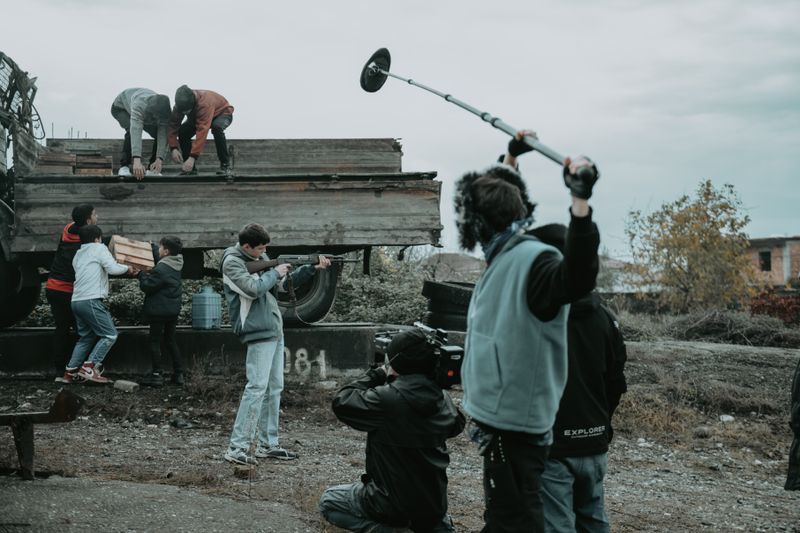
When stages are unavailable, productions shoot on location more than they intended, which trades control for availability. Location shooting introduces weather, noise, public access and reduced ability to rig lighting, all of which affect what a scene can be. Some productions relocate entirely to a territory with free capacity, which changes crew, incentives and often the look of the work.
What the cut is doing: virtual production stages with large video walls have absorbed some demand but require their own specialised facilities and are not simply substitutes.
The visible consequence is that a shortage shows up on screen as more exteriors and fewer controlled interiors.
Standing sets occupy capacity for years
A returning series with permanent sets holds a stage continuously, which removes that space from the market for as long as the show runs. That is efficient for the production and a real constraint on everyone else in the same city.
Striking and rebuilding a large standing set between seasons is expensive enough that keeping it is usually the cheaper option. When a long-running show ends, the released capacity noticeably alters what can be scheduled locally. This is one of the mechanisms by which a single successful series shapes an entire regional production economy.
This reads the finished film, which is not the same as reading the intention.
The infrastructure nobody photographs
Around the stages sit workshops, storage, post facilities, equipment hire, catering and transport, none of which appear in any account of film-making. A region can have stages and still be unable to support production if those services are absent, which is why capacity is not simply floor area. Crew depth is the other half, and it takes considerably longer to build than a building does.
Places that succeeded in attracting sustained production generally did so by supporting the whole ecosystem rather than by constructing stages alone. Where that has not happened, expensive facilities sit underused while production goes somewhere with fewer stages and more plumbers.
Side by side
| Consideration | What it means in practice |
|---|---|
| A stage is a specific and scarce object | Stage bookings are made long before scripts are finished. |
| Bookings run ahead of scripts | Stage supply responds slowly because construction takes years. |
| Supply responds slowly and overshoots | A shortage pushes production to locations chosen for availability rather than suitability. |
The takeaway
A production schedule is built backwards from a booked building, not forwards from a finished script.
Watch the transitions. That is where the argument of a film usually is.
Questions readers ask
Why not just shoot on location instead of a stage?
Control. A stage removes weather, noise and access problems and allows full rigging. Locations trade all of that away, and it shows in what a scene can attempt.
Why do stage shortages last so long?
Because building one takes years. Demand shifts within that period, so capacity often arrives after the surge that justified it, producing alternating shortage and vacancy.