Series
Daytime Drama Is Made At A Speed Nothing Else Attempts
Continuing daytime and evening serials produce hours per week under production systems that prioritise throughput, which shapes their staging, writing and performance style.

Continuing serials produce more finished drama per week than any other form. That output is possible because the entire production system is designed around throughput.
The output requirement drives everything
A serial broadcasting several times a week must deliver material continuously, with no gap for a hiatus and no scope for extended reshoots.
The schedule is therefore fixed and repeating: scripts arrive on a rhythm, sets are used on a rota, and each day produces a defined quantity of finished material.
Anything that would interrupt the rhythm is designed out, which is why the form favours interior sets, stable geography and stories that can be resolved with available resources.
Multiple cameras remove the reshoot
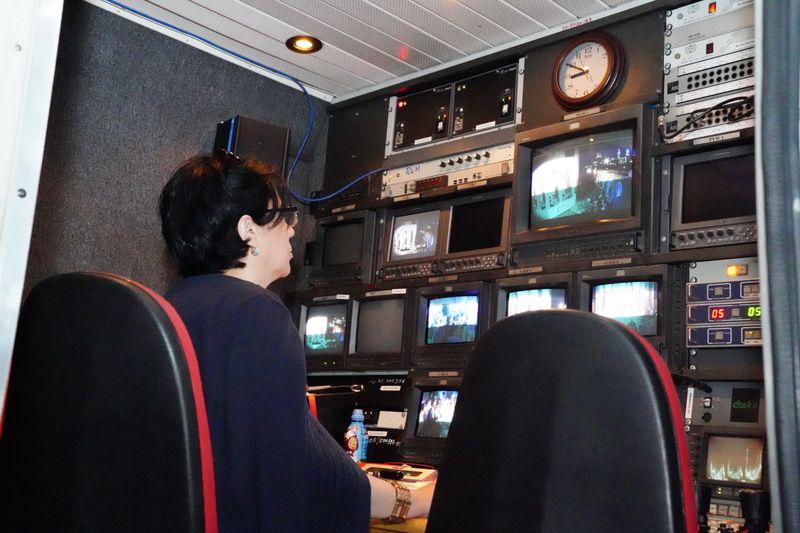
Scenes are recorded with several cameras simultaneously, so a complete set of angles exists after one or two passes.
This eliminates the repeated setups that consume a single-camera day and makes the editing largely a matter of selecting between existing views.
The consequence is a distinctive look, since lighting must serve all cameras at once and cannot be tailored to individual shots.
Writing is organised as a production line
Long-term story is planned months ahead by a small group, then broken into episodes and distributed to writers who work to detailed outlines.
That separation lets many episodes be written in parallel while keeping continuity, since the structure was fixed before drafting began.
Storylines are deliberately overlapping and staggered, so that a set of characters is always in an active phase while others are resting.
Performers work with minimal preparation
Cast members receive scripts close to recording and may shoot scenes from different episodes on the same day, tracking their character's position themselves.
The skill is a specific one: absorbing material quickly and delivering it reliably, which is why performers who thrive in the form often remain for years.
Continuity of performance is supported by the writing rather than by rehearsal, with characters defined clearly enough to be played consistently at speed.
The form supports a durable relationship
Because the story never concludes, the audience's relationship is with the ongoing situation rather than with a resolution they are waiting for.
That allows viewers to leave and return without difficulty, since the world continues in a recognisable form regardless of how long they were away.
It also means departures and arrivals of characters are structural events, absorbed by a story engine that was built to keep running through them.
Questions readers ask
Why do long-running mysteries so often disappoint?
Because deferral inflates expectation. The longer an answer is withheld, the more significance the audience assigns it, and few answers can meet an expectation built over years.
What makes a reveal feel earned?
An attentive viewer could have reached it from what was already shown, and it changes how earlier material reads on a rewatch.