Streaming
The picture on the tile was chosen by a test, not by a director
Streaming artwork is generated in variants and selected by response data. It is the last piece of a film that anyone designs, and often the only one a viewer sees.

This is written to be used rather than admired. Each section below is a decision about streaming artwork, and each one has a default.
Before you start
- Platforms generate multiple artwork variants per title and select by measured response.
- Artwork is frequently personalised, so two viewers see different images for one title.
- The image often misrepresents genre because misrepresentation performs well on a tile.
A tile is the whole shop window
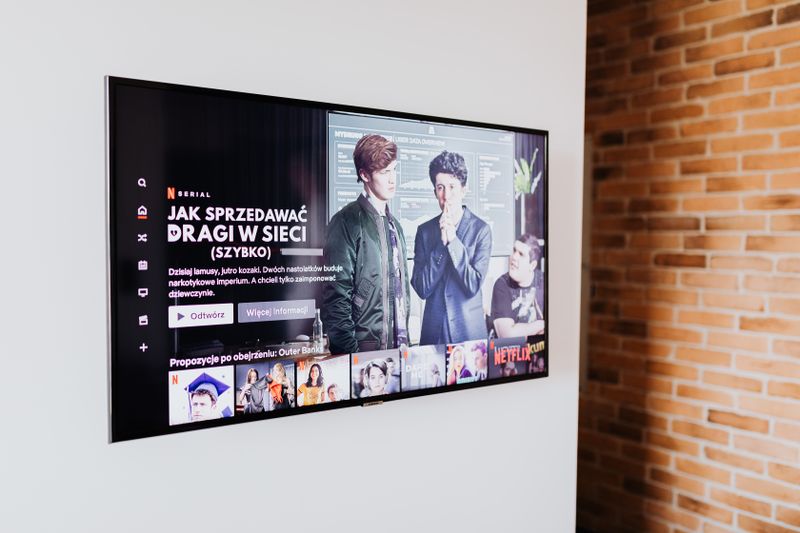
On an interface built from rows of images, the artwork is doing the job that a poster, a trailer and a review once shared between them. It has to work at a very small size on a phone, which rules out crowds, wide landscapes and anything depending on legible text. This constraint explains why so much streaming artwork consists of one or two faces filling the frame with high contrast behind them.
It is a design brief driven by pixel dimensions rather than by the film, and it flattens visual variety across an entire catalogue. Titles with distinctive existing key art are often replaced with a generic version for precisely this reason.
Variants are produced and measured
Platforms commonly commission or generate several artwork options per title and then compare how each performs when shown to comparable audiences. The winning image is the one that produces engagement, which is a measurable quantity and not the same as accuracy or quality. This process runs continuously, so the image attached to a title can change repeatedly over its life on a service.
Personalisation adds another layer, where the variant shown is selected according to what a particular account has previously watched. Two people discussing the same title can therefore be describing genuinely different images without either being mistaken.
Accuracy and performance are different objectives
An image that suggests romance for a film containing one romantic subplot will attract viewers who came for something the film does not deliver. That mismatch registers later as abandonment or dissatisfaction, but the initial click was counted first, and the two measurements often sit with different teams.
Systems that optimise on completion rather than on the click reduce the problem, and platforms have moved in that direction over time. Even so, the incentive to overstate is structural, since a tile competes with dozens of others in a single row. Audiences have learned to distrust tiles, which is a slow erosion of the interface’s usefulness.
Faces, expressions and what they signal
A direct gaze at the camera performs differently from an averted one, and platforms have accumulated substantial practical knowledge about which expressions attract attention. Emotional legibility is prioritised, so ambiguous or neutral expressions are usually replaced with clearly readable ones.
The consequence is a catalogue where almost every image displays a strong emotion, which reduces the information any single one carries. When everything shouts, nothing signals, and viewers fall back on titles, star recognition or the recommendation row heading instead.
This is a familiar pattern in any competitive attention system and is not specific to streaming.
Localised artwork is a separate production
Territories receive different artwork reflecting local recognition, language and design conventions, so a title looks materially different between countries. Text overlays including title treatments and accolade lines have to be produced per language, which is a real cost across a large catalogue. For licensed titles the rights holder may impose limits on how far artwork can be altered, which constrains what a platform can test.
For originals the platform controls everything, which is one of the quiet advantages of owning a title outright. The result is that the same film is presented as several different products depending on where and how it is being offered.
This reads the finished film, which is not the same as reading the intention.
What this means for what gets watched
Because the tile is the primary discovery surface, titles that photograph well in a small rectangle have an advantage unrelated to their merits. Films with abstract, wide or restrained visual identities are disadvantaged, and their artwork is frequently rebuilt into something more conventional.
What the cut is doing: commissioning teams are aware of this, and considerations about how a project will present on a tile now enter conversations early. That is a genuine instance of a distribution surface shaping production decisions rather than merely presenting them. The two-minute trailer used to be the compression point for a film; a rectangle of a few hundred pixels increasingly is.
The takeaway
The tile is a tested advertisement, not a description. Read the row heading instead.
The trailer sells a premise. The film has to survive its own middle.
Questions readers ask
Why does the same title show a different image to different people?
Because artwork is personalised. Platforms hold several variants and select one based on what an account has watched, so two viewers genuinely see different tiles.
Why does streaming artwork often misrepresent a title?
Because variants are selected by measured response rather than accuracy. An image that attracts attention wins even when it suggests a genre the title does not deliver.