Series
Unscripted television is edited into a story that was never shot
Hundreds of hours of footage become forty minutes with a shape. Everything about that shape is constructed after the fact, and the techniques are well documented.
The theory of unscripted television is well covered elsewhere. This is about the version you meet in practice.
What holds up in practice
- Shooting ratios in unscripted production are enormous compared with drama.
- Interviews recorded separately supply the narration that structures episodes.
- Editing can construct sequences of events that did not occur in that order.
The ratio is the story
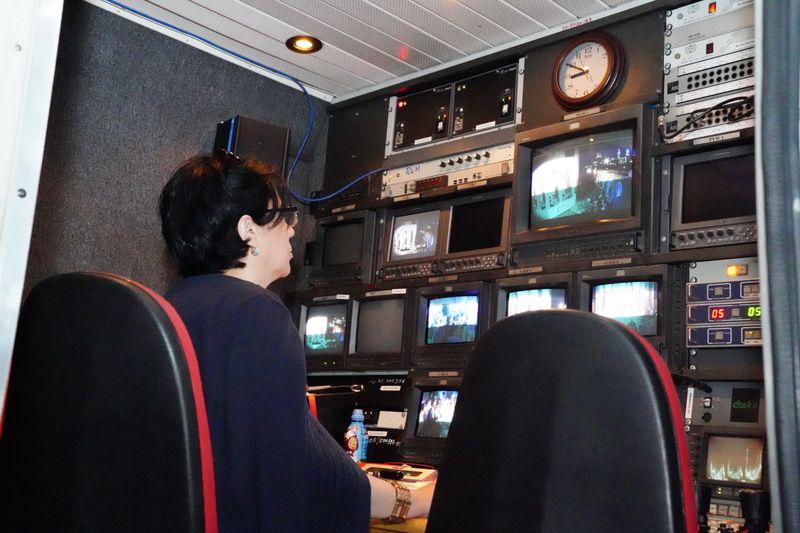
Unscripted formats record vastly more material than is used, and the selection is where authorship happens. A story producer identifies threads in the footage and shapes them into episodes, which is a writing job performed with a keyboard on an edit timeline.
The role frequently carries a producing rather than a writing credit, which has been a long-running labour dispute in some jurisdictions. The work is closer to screenwriting than the credit suggests.
Interviews carry the structure
Pieces to camera recorded separately are used to narrate, explain motivation and set up events, which is how an episode acquires cause and effect. Questions are asked to elicit usable statements, and answers are cut to serve the constructed narrative. This is standard practice across the genre and is what makes chaotic footage legible.
On screen, it also gives editors enormous latitude over what a participant appears to think.
Frankenbiting is a known and criticised technique
Assembling a sentence from words recorded at different times produces statements that were never made. The practice is widely reported within the industry and sits on a spectrum from ordinary trimming to fabrication. Where the line falls is contested and is generally governed by broadcaster compliance standards rather than by law.
In practice, standards differ substantially by country and by broadcaster.
Situations are engineered, not invented
Producers construct circumstances likely to generate conflict or emotion and then record what happens. That is different from scripting, and it is also not passive observation, which is why the term unscripted is preferred to reality. Participants respond genuinely to manufactured conditions.
Understanding this resolves most arguments about whether these programmes are fake.
Participant welfare is a real and unsettled issue
Contributors are frequently not professional performers, are exposed to public reaction and have limited control over their portrayal. Duty-of-care requirements have been strengthened by regulators and broadcasters in several countries following documented harm. Provision remains uneven, particularly across borders and on platforms outside traditional broadcast regulation.
Watched twice, this is the most substantive criticism of the genre and it is a governance problem rather than an aesthetic one.
Budgets and schedules here are reported rather than confirmed, and studios rarely correct them.
The economics explain the volume
Unscripted production costs a fraction of drama per hour, needs no name cast and can be produced quickly. That makes it the load-bearing content of most schedules and a large share of streaming catalogues. It also funds the prestige output that receives the attention.
Any account of television economics that ignores unscripted is describing a minority of the business.
The takeaway
The events happened. The story was assembled afterwards.
Craft is the part that keeps working after the surprise has gone.
Questions readers ask
Is reality television scripted?
Generally not in the sense of dialogue written in advance. Situations are engineered, and the story is constructed in the edit using separately recorded interviews.
What is a story producer?
Someone who finds narrative threads in recorded footage and shapes them into episodes. The function is close to writing; the credit usually is not.