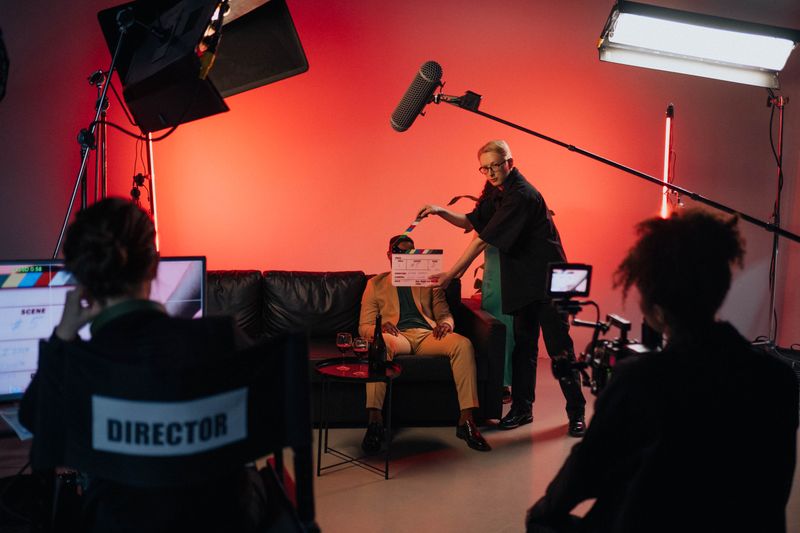
On Screen
A scene is doing at least three things at once
Good scenes advance plot, change a relationship and reveal character simultaneously. Weak ones do one.
This is less a set of instructions about scene construction than an argument, and it is worth saying so at the start.
The argument in brief
- A scene should end in a different state from how it began.
- Conflict need not be argument — it is any unmet want.
- Scenes that only convey information are the ones that feel flat.
Something has to change
The working test for a scene is whether the situation at the end differs from the situation at the start. That change can be in information, in the relationship between characters, or in what is now possible. Scenes where nothing changes read as filler even when the dialogue is good, which is why they are the first cut.
This is also why exposition delivered without a change of state is so noticeable.
Conflict is want, not shouting
Two characters wanting slightly different things from the same conversation is enough to make a scene work. The most effective version is often two people being pleasant while wanting incompatible outcomes.
In practice, argument is the crudest form of this and the least interesting to watch at length. Scenes where the two characters genuinely agree can still hold, provided the audience knows something one of them does not, because the tension then sits between the scene and the viewer rather than inside the room.
Entering late and leaving early
Scenes that begin after the greeting and end before the goodbye move faster and imply more. The audience fills in the surrounding material without noticing, which is more efficient than showing it. This is the single most common note given in script editing and the easiest to apply.
On screen, it can be overapplied: a film that drops into every scene mid-argument offers no variation in attack, and the device stops working once nothing is ever allowed to begin quietly.
Subtext is what is not said
Characters saying exactly what they mean is rare in life and flat on screen. The gap between what is said and what is wanted is where performance lives, which is why on-the-nose dialogue gives actors nothing to do.
By the second act, the audience enjoys knowing more than the characters say, and the pleasure is in the inference. The exception is a character who genuinely has no interior evasion, and writing one convincingly is harder than writing concealment, because the flatness has to register as a trait rather than as a failure of the writing.
Television scenes carry a different load
A television scene also has to service ongoing arcs, maintain multiple threads and end on something that carries to the next episode. That constrains the shape considerably compared with a film scene, which only has to serve one story.
What the cut is doing: it is a genuinely different craft problem and explains why some film writers struggle in the format. The compensation is accumulated history, since a series that has run for years can put weight into a single glance between two characters that no film scene could establish in the same handful of seconds.
This reads the finished film, which is not the same as reading the intention.
The scene before decides what this one can do
A scene is always read against the one preceding it, so identical material plays as relief, as escalation or as irony depending purely on placement. Writers use this by putting something quiet where the audience expects a confrontation, which makes the confrontation land harder for having been withheld.
It also means a scene can be perfectly built and still fail, because the fault is in the sequence rather than on the page. Diagnosing that requires reading the run of scenes rather than the scene itself, which is why a note about one scene feeling flat is so often answered by moving a different one.
The takeaway
Ask what is different at the end. If the answer is nothing, that is why it felt slow.
Craft is the part that keeps working after the surprise has gone.
Questions readers ask
What does "on the nose" mean?
Dialogue in which characters state their feelings and intentions directly, leaving no gap for subtext. It reads as flat because there is nothing to infer.
Why do some scenes feel like filler?
Usually because the situation is identical at the end. Information delivery without a change of state is the most common cause.