Craft
Production design is exposition you never have to listen to
A room can tell you who lives in it, how long they have been there and what they are pretending. That is a department, not a coincidence.
This is written to be used rather than admired. Each section below is a decision about production design, and each one has a default.
Before you start
- Set dressing communicates backstory without using dialogue.
- Sets are built to be shot from specific positions and lit from above.
- Colour palettes are agreed across departments before the shoot.
Objects do character work
What is on a shelf, how worn a chair is and whether anything has been repaired tells an audience about income, history and habits within seconds. Set decorators build this deliberately, often writing histories for characters that never appear in the script. It is faster than dialogue and it survives on a second viewing, where exposition does not.
The clearest test is a scene in an empty new flat compared with one in a long-occupied room; the same conversation reads differently.
A set is a machine for shooting
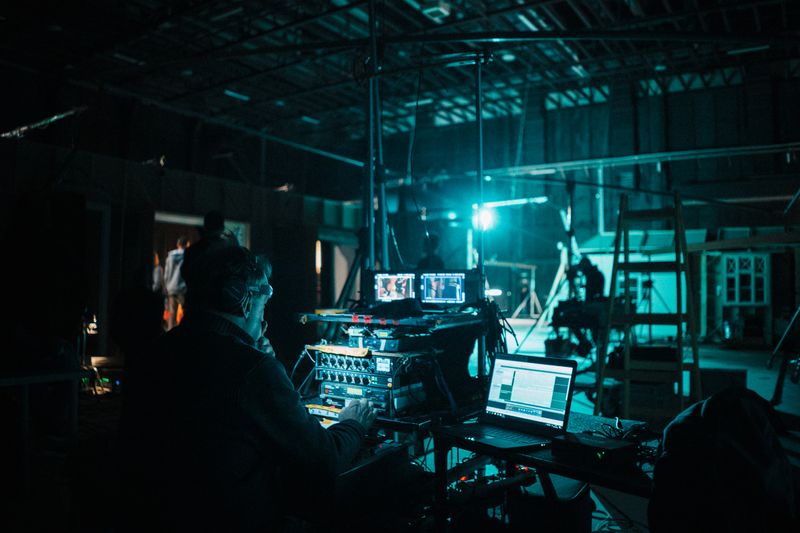
Built sets have removable walls, ceilings that can be flown out and floors reinforced for camera track, none of which exists in a real location. This is why interiors shot on a stage can be lit from directly above and moved through in ways a real room would not allow.
In practice, locations trade that control for authenticity and cost far more in time, transport and noise management. The choice between them is usually a schedule decision as much as an aesthetic one.
Palette is agreed in advance
Designers, costume and cinematography settle a colour range early so that separation between actors and backgrounds is achievable on the day. A wall painted a shade too close to a costume forces either repainting or a lighting workaround, both expensive.
On screen, this coordination is why films look consistent across scenes shot months apart in different countries. When it goes wrong the fix lands in the grade, which can only push colours so far before faces suffer.
Period work is research plus compromise
Recreating a period means sourcing or building furniture, signage, packaging, vehicles and paperwork that no longer exists commercially. Designers routinely simplify toward what an audience recognises as the period rather than what was statistically typical, because accuracy that reads as wrong is a failure. That tension between documented accuracy and legibility is a genuine and unresolved argument within the craft.
It is most visible in signage and graphic design, where a truly accurate typeface can look anachronistic to modern eyes.
Space controls blocking
Where doors, windows and furniture sit determines how actors can move, which determines what shots exist. Designers work from floor plans with the director precisely so that the geography supports the scene rather than fighting it.
On screen, a corridor that is too wide or a table that is too long changes the power dynamic of a conversation before anyone speaks. This is why designers are hired at the same time as cinematographers rather than after them.
Craft credits are collaborative, and attributing a choice to one department oversimplifies it.
Digital extension changed the economics
Building the lower storey practically and extending upward digitally is now standard, because actors need something real to touch and the rest can be added. This reduced the cost of scale substantially and shifted spend from construction into post-production.
By the second act, it also changed what gets designed, since the physical build is now a fragment of the final image. The department still designs the whole environment; only part of it gets constructed.
The takeaway
Read the room before the dialogue starts. Somebody wrote it.
The trailer sells a premise. The film has to survive its own middle.
Questions readers ask
What is the difference between a production designer and an art director?
The production designer sets the overall visual approach; art directors run the execution — drawings, construction, budgets and the crews building it.
Why do sets look better than real locations on camera?
They are built for the camera: controllable walls, lighting access from above, chosen materials and surfaces that behave predictably under film lighting.