On Screen
Performance is mostly reaction, and the camera knows it
The best-remembered moments in film are frequently of somebody listening rather than speaking.
Treat the sections below as a sequence. With screen performance, getting the early decisions right makes the later ones much easier.
Before you start
- Screen acting is scaled to the lens; stage technique reads as excessive.
- Reaction shots carry a disproportionate share of emotional information.
- Editing can construct a performance that was not delivered as such.
Scale is the fundamental difference
Stage performance projects to the back of a room; screen performance is observed from a metre away and magnified. A gesture that reads as clear on stage reads as broad on screen, which is why the transition between the two is genuinely difficult. The best screen performances frequently look like very little is happening, because the camera is doing the amplification.
This is also why a close-up requires stillness that would be invisible in any other medium.
The listener carries the scene
Audiences look at the person reacting to information as much as the person delivering it. Directors shoot extensive reaction coverage for exactly this reason, and editors frequently stay on a listening face longer than on the speaker. Actors describe listening as the harder half of the job, and it is the part least visible in a script.
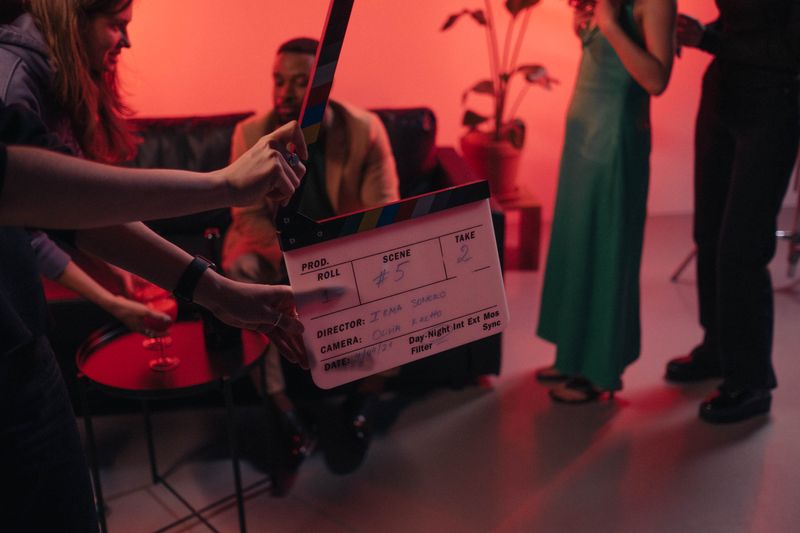
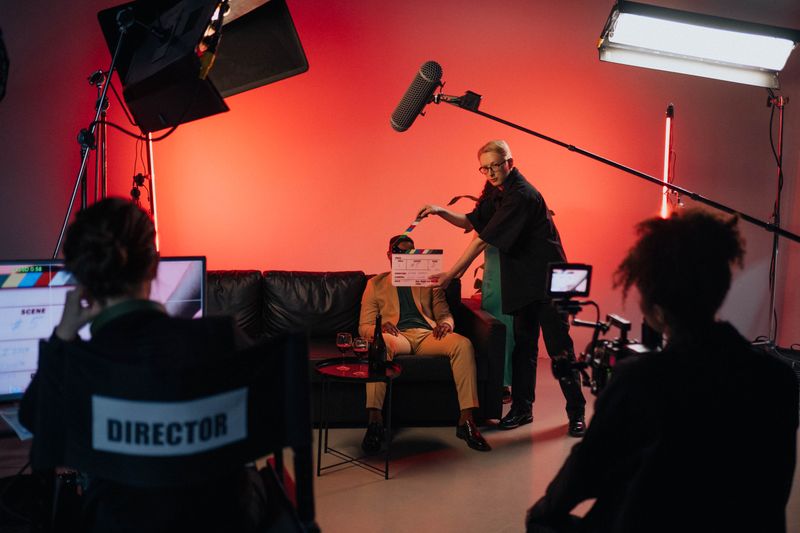
Reaction coverage is often shot last and sometimes after the other performer has been released for the day, with a script supervisor reading the lines from beside the lens, which is why actors speak so warmly about a partner who stays to play it properly.
Editing constructs performance
A reaction shot from a different take, or even a different scene, can be cut in to create a response that was never played that way. The Kuleshov effect demonstrated over a century ago that audiences read emotion into a neutral face based on what precedes it. This is not deception so much as the basic grammar of the medium, and it means performance credit is shared with the edit.
What the cut is doing: the constraint on it is geometric rather than emotional, since eyeline, head position and the direction of a glance all have to match, and a better reaction from the wrong angle simply cannot be used.
Physical specificity does the characterisation
How a character sits, holds a cup, enters a room and occupies space communicates more than most dialogue. Actors build these deliberately, and they survive translation and dubbing in a way that vocal work does not.
It is also the layer most visible on a second viewing, when the plot is no longer taking attention. Costume and props do much of the work before any decision is consciously made, because a coat that restricts the arms or shoes that change a walk alter a performance the moment they are put on.
Long takes change the demand
An unbroken take removes the editor's ability to select, which puts the entire performance burden on a single continuous delivery. It also changes the actor's relationship to time, since a mistake at minute six costs the whole take. Films built on long takes generally shoot far fewer setups and rehearse considerably more.
What the cut is doing: the camera department carries the identical risk, because focus, movement and timing must hold for the full duration, and a long take is lost to a focus slip at least as often as to a fluffed line.
This reads the finished film, which is not the same as reading the intention.
Casting tests two things, and only one of them is acting
A performer can be excellent alone and wrong opposite a particular colleague, which is why later rounds of casting put candidates in a room together rather than assessing them separately. What is being judged is whether two people appear to share a history, and that is not reliably predictable from either performance viewed on its own. Self-taped auditions have made the early rounds faster and cheaper and have removed the room altogether, which shifts the first filter toward whatever reads well in a short clip recorded at home.
Watched twice, availability constrains the result more than audiences assume, so a part frequently goes to the person who was free for the eleven weeks the schedule needed rather than to the strongest reading.
The takeaway
Watch the person not speaking. That is usually where the scene is.
The trailer sells a premise. The film has to survive its own middle.
Questions readers ask
What is the Kuleshov effect?
An early demonstration that an identical neutral face is read as expressing different emotions depending on the shot cut before it. It underpins how reaction shots work.
Why do stage actors sometimes look wrong on screen?
Scale. Techniques calibrated to project to an auditorium become excessive when magnified by a close lens.