Streaming
Buttons On A Remote Are Sold Like Shelf Space
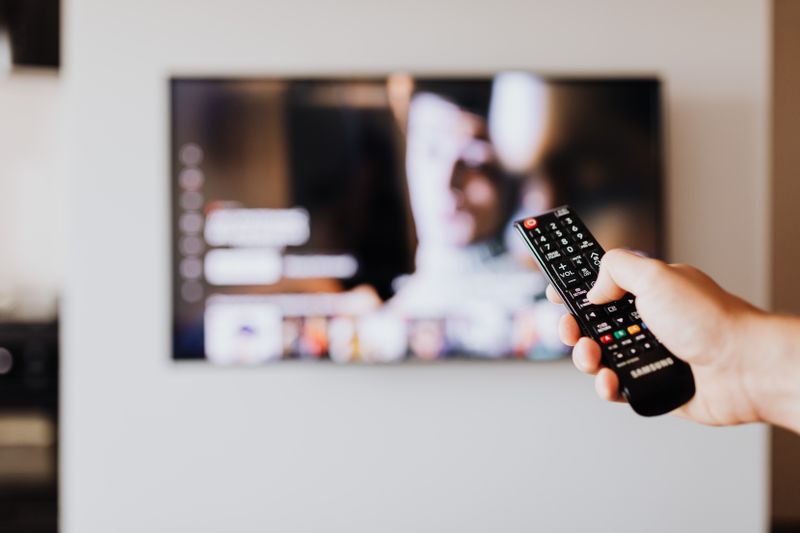
Dedicated service buttons on television remotes are commercial placements, and their existence reflects manufacturer agreements rather than a judgment about what viewers use most.

The branded buttons on a television or streaming device remote are advertising positions. They are negotiated with the manufacturer, and the services that appear there are the ones that paid to be within a thumb's reach.
Hardware is sold close to cost
Streaming devices and many televisions are priced aggressively, and the margin on the physical object is thin or absent.
The business model is what happens afterward: the interface the buyer uses for years, the placements on it and the data about what gets watched.
A remote button is the most physical version of that. It is a permanent placement on an object the household will keep and handle daily.
Proximity is the product being sold
Every step between switching on a television and starting a program is a point where a viewer can be diverted to something else.
A dedicated button collapses that sequence to one press, which removes the home screen, the row of tiles and every competing recommendation.
Services value that enough to pay for it, because the alternative is competing for attention on a screen the device manufacturer controls.
The remote is only the visible part
The same commercial logic governs the interface. Rows on a home screen, the large banner at the top and the order of apps in a list are all subject to agreements.
Some placements are sold outright and others are traded for other considerations, but few are determined purely by what an individual viewer uses most.
Voice search sits in the same category, since the decision about which service a spoken title resolves to is a commercially significant one.
The buttons age badly
A remote is manufactured once and lives in a household for years, while the services on it merge, rebrand and occasionally cease to exist.
Older remotes therefore carry buttons for services that no longer operate under that name, which is a fair record of what the market looked like when the set was sold.
Manufacturers mitigate this by making some buttons reassignable in software, though the printed label stays what it was.
What this means for how catalogues are found
Viewers overwhelmingly watch what is easiest to reach, and the arrangement of that reachability is a commercial artifact rather than a neutral one.
A service without a button competes from the home screen, and a title inside that service competes again once the viewer arrives.
Which is why distribution on connected televisions is treated by services as a genuine strategic problem, on the same level as what they commission.
Questions readers ask
Why can I never find older films on a service that has them?
Usually thin metadata. Older licensed titles often carry only a synopsis and a genre, so the recommendation system has almost nothing to work with.
Are recommendations based on the film itself?
No. They are based on structured descriptions of it plus viewing behaviour. The system has no direct access to what the film is actually like.