Archive
Playing An Old Format Needs A Machine Nobody Makes
Obsolete moving image carriers can only be read on equipment that has stopped being manufactured, so archives compete for surviving machines and for the people who can repair them.

An archive can hold a tape in excellent condition and still be unable to see what is on it. The limiting factor is often the playback machine rather than the carrier.
Every format brought its own hardware
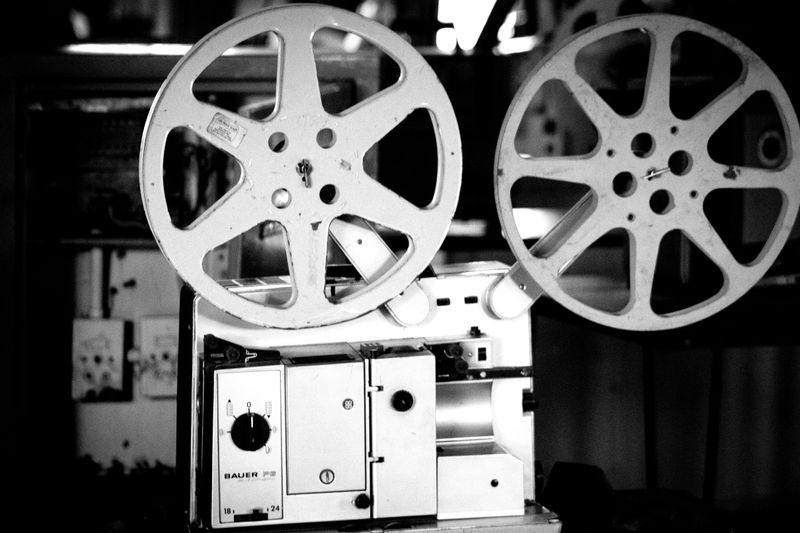
Moving image history is a sequence of incompatible carriers, each requiring a specific transport, head assembly and control system. A machine for one is useless for another.
When a format left the market, its manufacturing lines closed. The installed base became finite from that day and has been shrinking through wear and disposal ever since.
Archives that need to read those carriers are therefore dependent on surviving equipment, which they buy at auction, accept as donations, or cannibalise for parts.
Spare parts are the real constraint
The parts that fail are the ones that touch the tape or film: heads, rollers, belts and guides. They were designed as replaceable consumables and are no longer produced.
This means the practical measure of an archive's capability is not how many machines it owns but how long it can keep one running. Two identical decks are one machine and a parts supply.
Some institutions have parts machined to order where the geometry can be reproduced. Precision components with proprietary tolerances often cannot be, and their exhaustion sets a deadline.
The knowledge is scarcer than the equipment
Aligning a transport and diagnosing a fault requires experience built on machines that are no longer in daily use anywhere. That skill was learned in working facilities that have closed.
Engineers who maintain this equipment are few and they are ageing out. Where the skill disappears before the transfers are done, the machines become objects rather than tools.
Documentation helps less than it should, because service manuals assume a technician who has already been trained on the platform and has the alignment tapes to work against.
This creates a hard deadline for transfer
Ordinary preservation asks how long the carrier will survive. Obsolete formats invert the question: the carrier may outlast every machine capable of reading it.
Archives plan transfers around that, prioritising formats whose playback base is closest to collapse rather than those whose material is most degraded.
Shared facilities are the rational response
Because the equipment and the expertise are both scarce, it makes little sense for each institution to maintain its own. Specialist facilities and pooled arrangements concentrate what remains.
The cost is that smaller archives must ship irreplaceable material elsewhere and wait in a queue, which is a genuine risk weighed against the certainty of losing access altogether.
Questions readers ask
Why were so many old films destroyed?
They had no library value before reissue and home viewing existed, storage of unstable stock cost money and carried fire risk, and prints could be processed to recover silver.
Are lost films still being found?
Regularly. Export prints in overseas archives, collectors' holdings and miscatalogued material continue to yield recoveries, often incomplete or in alternate versions.