Craft
Focal length changes a face before it changes the frame
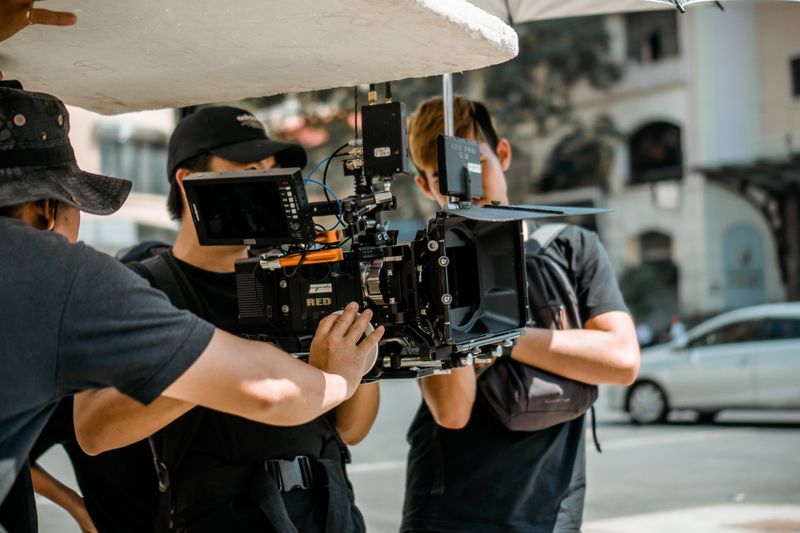
Lens choice is usually discussed as how much fits in the shot. Its stronger effect is on facial geometry and apparent distance.
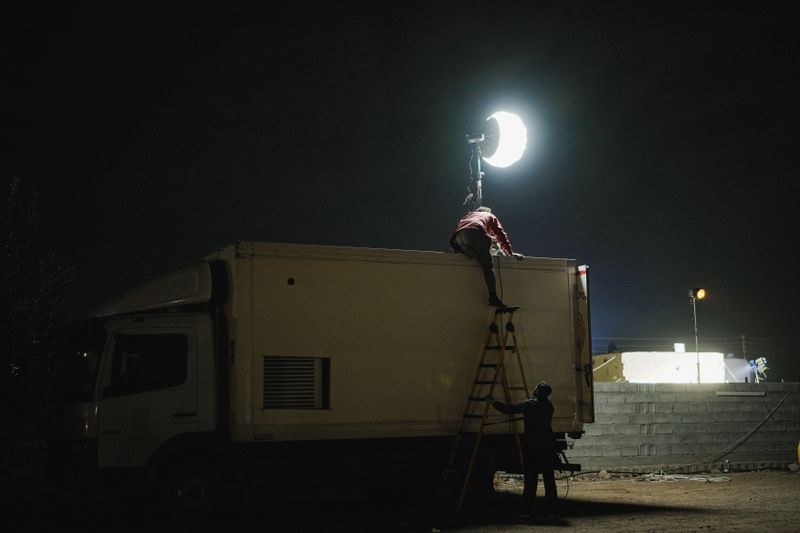
What follows is an argument about lens choice, and about where the received version of it stops being true.
The argument in brief
- Perspective distortion comes from camera distance, which lens choice forces.
- Long lenses compress depth and separate a subject from the background.
- Wide lenses on close-ups exaggerate features and are used deliberately.
Distance, not glass, distorts a face
A wide lens appears to enlarge a nose because to fill the frame with a face you must place the camera very close, and proximity exaggerates the near features. A long lens flattens the same face because it allows the camera to stand back, compressing the distance ratio between nose and ears.
The lens is doing the framing; the distance is doing the distortion, and this is the part most often described incorrectly. Portrait conventions in photography and in cinema both derive from this single geometric fact.
Compression changes the world behind the actor
Long lenses make background elements appear larger and closer, which is why a crowd shot on a long lens feels oppressive. Wide lenses push backgrounds away and make spaces feel larger than they are, which is why they dominate location work in small rooms. The same corridor shot on two focal lengths reads as two different buildings.
This is a more powerful tool for controlling how a space feels than set dressing.
Depth of field is a consequence, not a style
Shallow focus results from a combination of aperture, focal length and subject distance, and it isolates a subject by removing competing detail. Deep focus keeps foreground and background legible simultaneously, which lets a scene be staged in depth rather than cut between planes. Choosing deep focus means committing to blocking, because the audience can see everything and the composition has to hold.
In practice, the current prevalence of shallow focus is partly aesthetic fashion and partly a consequence of shooting quickly in uncontrolled locations.
Anamorphic is a set of artefacts people like
Anamorphic lenses squeeze a wide image onto a sensor and are unsqueezed in post, producing a wider frame from the same capture area. The associated look — oval highlights, horizontal flares, distinctive edge softness and a particular focus falloff — comes from the optical compromises involved. Those artefacts are now sought deliberately and emulated digitally, which is a good demonstration of how technical limitations become aesthetic signatures.
The format also has practical costs: less light, closer minimum focus limits and heavier glass.
A film usually has a lens grammar
Cinematographers commonly assign focal lengths to states — wider as a character loses control, longer as they become isolated — and hold the rule across the film. Audiences do not consciously register the system and do respond to its consistency. This is why breaking the pattern once in a film can land heavily.
Where no system exists, the coverage tends to feel generic even when each shot is well composed.
This reads the finished film, which is not the same as reading the intention.
Zooms are back and doing something different
A visible zoom reads as observational or as a documentary intrusion, because the movement has no physical analogue in human vision. For decades this made zooms unfashionable in narrative work, and they have returned as a deliberate marker of a period or a register.
Modern zoom lenses are also used simply as variable primes, set and locked, which is a scheduling convenience rather than a style. Distinguishing the two uses tells you whether a filmmaker is quoting or just moving faster.
The takeaway
The lens decided how close the camera stood. That is what changed the face.
Craft is the part that keeps working after the surprise has gone.
Questions readers ask
Why do phone photos distort faces?
Because the wide lens forces you close to fill the frame, and that proximity exaggerates the nearest features. Standing back and cropping produces a more flattering geometry.
What does a 50mm lens actually mean?
A focal length, whose field of view depends on sensor size. On a given format it determines how far back the camera must stand for a chosen framing, which is what shapes the image.