Craft
A score is written last and spends its life fighting the temp track
Composers arrive after the edit, work to a deadline nobody else has, and are frequently asked to reproduce music already cut into the film.
The theory of film scoring is well covered elsewhere. This is about the version you meet in practice.
What holds up in practice
- Temp music placed during editing shapes expectations before a composer starts.
- Scoring happens against the shortest schedule in post-production.
- Where music sits in the mix decides whether it is heard or felt.
Temp tracks set the target
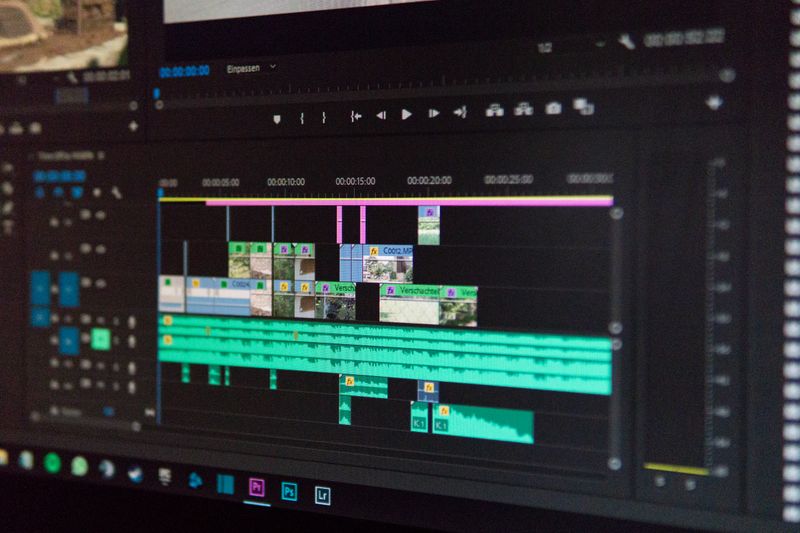
Editors place existing music under scenes during cutting so that pacing and tone can be judged, and everyone watches that version for months. By the time a composer delivers, the temp has become the reference, and original music that departs from it is experienced as wrong.
This is a well-documented dynamic within the profession and a persistent source of homogeneity in film music. Some directors avoid temp entirely for this reason, and some editors cut to a composer's early sketches instead.
The schedule is brutal by design
Scoring cannot begin in earnest until the edit is stable, and delivery is fixed by the release date, so the window is whatever is left. A large orchestral score written and recorded in weeks is normal rather than exceptional.
This is why composers run teams of orchestrators, additional writers and programmers, which is standard practice and not concealed. The compressed window is a scheduling consequence of picture running late rather than a musical choice.
Spotting is where the decisions happen
The spotting session determines exactly where music starts, stops and changes, and those choices matter more to the film than the melodic material. Starting a cue two seconds earlier can turn an ambiguous moment into a signposted one.
Deciding not to score a scene is frequently the strongest available option and is used less often than it should be. Audiences experience the results as tone; the underlying decisions are structural.
Themes have to be recognisable and flexible
A theme that only works in one arrangement cannot follow a character through a film, so composers build material that survives being slowed, fragmented and reharmonised. Recognition can then be triggered by three notes, which lets the score carry narrative information without stating it. This is why leitmotif technique persists in film music despite periodic fashions against it.
It also explains why scores built entirely from texture can feel emotionally powerful and narratively inert.
The mix decides how music functions
Score placed high in the mix instructs the audience how to feel and is read as emphatic or manipulative depending on execution. Score placed low, under dialogue and effects, is felt without being consciously heard, which is where much modern scoring sits. The same cue can be either, and the decision is made in the final mix rather than in composition.
In the edit, complaints about intrusive scoring are often complaints about mix balance rather than about the music itself.
Budgets and schedules here are reported rather than confirmed, and studios rarely correct them.
Licensed songs are a different craft and a different budget
Needle-drops require clearing both the composition and the specific recording, which are separately owned and separately priced. Costs vary enormously by song and by usage, and a track cleared for a cinema release may not be cleared for streaming or for every territory. This is why songs are occasionally replaced in later releases of a film, which audiences notice and rarely have explained to them.
By the second act, music supervisors manage both the creative selection and the rights negotiation, and the second constrains the first heavily.
The takeaway
Notice where music starts. That decision was made in a room, on purpose.
Craft is the part that keeps working after the surprise has gone.
Questions readers ask
Why do so many scores sound alike?
Temp tracks are a major contributor: composers are frequently asked to match existing music cut into the edit, which propagates a house style across unrelated films.
Why does a song sometimes change in a later release of a film?
Music rights are licensed for specific media, terms and territories. When a licence does not extend to a new format or window, the track is replaced.