Archive
The colour you remember was a chemical process with its own rules
Historic colour systems did not simply record what was in front of the camera. Each one imposed a palette, and restoration has to decide which version is the truth.
What follows is an argument about historic colour processes, and about where the received version of it stops being true.
The argument in brief
- Early colour systems recorded separations or dyed the print rather than capturing colour directly.
- Design and makeup were adjusted to suit the specific process being used.
- Faded prints are the usual surviving evidence, which makes restoration interpretive.
Colour was manufactured, not captured
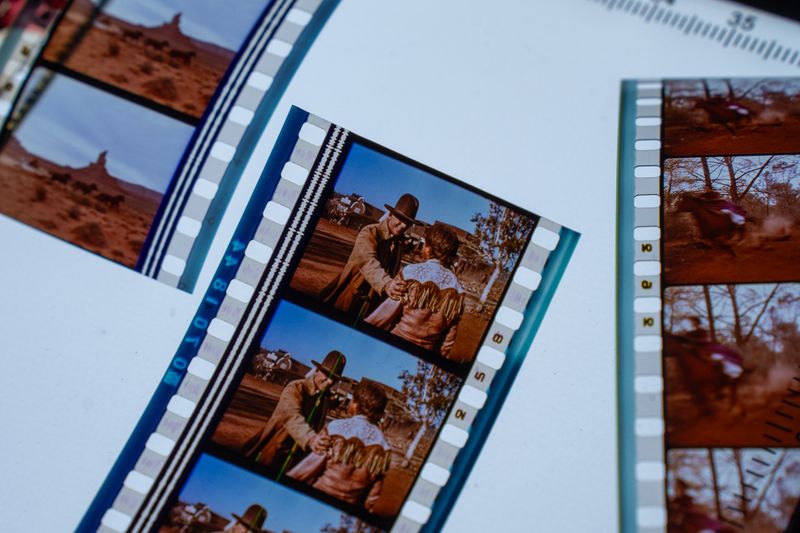
Several historic systems worked by photographing separate records through coloured filters and then recombining them at the printing stage. Others applied dye directly to prints, whether by hand, by stencil or by chemically tinting whole sequences to indicate night, fire or interiors. None of these approaches produced a neutral record of what a camera saw, and each imposed a characteristic range of achievable colours.
That range was well understood by the people using it, who designed sets, costumes and makeup to sit inside it. Treating the resulting palette as a distortion to be corrected therefore misunderstands what was being made.
Production adapted to the process
Where a system reproduced certain hues poorly, those hues were avoided in design, and where it exaggerated others they were used deliberately. Lighting levels were dictated by the sensitivity of the stock, which is why some early colour productions were lit far more intensely than monochrome equivalents. Makeup was reformulated for colour photography because the tones that read correctly in monochrome looked wrong once hue was recorded.
Camera equipment for some systems was large and comparatively immobile, which constrained camera movement and therefore the staging of scenes. The look of these films is consequently a record of a technical system as much as of an artistic intention.
Tinting and toning carried meaning
Before subtractive colour systems became standard, whole scenes were commonly tinted amber for lamplight, blue for night or red for fire. Audiences read these conventions fluently, and a monochrome copy of such a film removes an entire layer of information it was made to carry.
Many surviving copies are exactly that, having been duplicated onto black and white stock at some point for cost or convenience. Restorations that reinstate tinting rely on surviving tinted prints, on written records of the original scheme, or on both. Where neither exists, the choice becomes an informed reconstruction, and responsible archives say so explicitly.
Fading is the normal condition of the evidence
Colour dyes fade at different rates, so a print that has aged badly typically shifts overall towards whichever dye survived best. Restorers working from such a print cannot simply reverse the shift, because information lost to fading is not recoverable by adjustment. Where multiple elements survive in different states, comparison between them helps establish what the original relationship between channels was.
Original camera records, where they survive, are far better evidence than any release print, which is why archives pursue them.
Absent good evidence, restoration becomes an argument supported by documentation rather than a measurement.
Reference material decides the outcome
Production paperwork, costume swatches, printed publicity, contemporary reviews describing colour and any surviving unfaded fragment all contribute. Where people involved in the original production are available, their recollection is useful and treated cautiously, since memory of colour is unreliable.
In the edit, some restorations publish their reasoning alongside the result, which allows disagreement to be informed rather than merely aesthetic. Different archives working from different elements have reached visibly different conclusions about the same film. That divergence is a feature of an honest process rather than evidence that somebody got it wrong.
This reads the finished film, which is not the same as reading the intention.
Modern displays introduce a further gap
A restoration graded for projection in a cinema does not look the same on a bright domestic screen with different colour capability. Wider colour ranges available on modern displays can render a historic palette in a way no contemporary audience could have seen.
Restorers therefore target a defined reference environment and accept that home viewing will diverge from it. Viewers can reduce the divergence by disabling automatic picture enhancement, which alters colour aggressively by default on many sets. The honest position is that any presentation is an approximation, and the useful question is whether the approximation is documented.
The takeaway
The palette was a constraint the film was designed around, not an error to be corrected.
Craft is the part that keeps working after the surprise has gone.
Questions readers ask
Why do old colour films look so distinctive?
Because the process imposed a limited palette, and design, lighting and makeup were built to work inside it. The look is the system as much as the intention.
Can faded colour be restored accurately?
Only partly. Dyes fade at different rates and lost information cannot be recovered by adjustment. Good restorations reason from surviving elements and documentation, and say what they inferred.