Archive
Sound on film was a photograph of a waveform, and it aged like one
For decades the soundtrack lived beside the picture as an optical stripe. How it was recorded explains both its character and its particular ways of failing.

There is a settled way of talking about optical sound tracks. It is worth asking how much of it survives contact with the detail.
The argument in brief
- Optical tracks encode audio as a photographic image read by a lamp and a sensor.
- The track sits ahead of the corresponding picture frames, not alongside them.
- Scratches and dirt on the track are audible because they are read as signal.
Sound as an image on the same strip
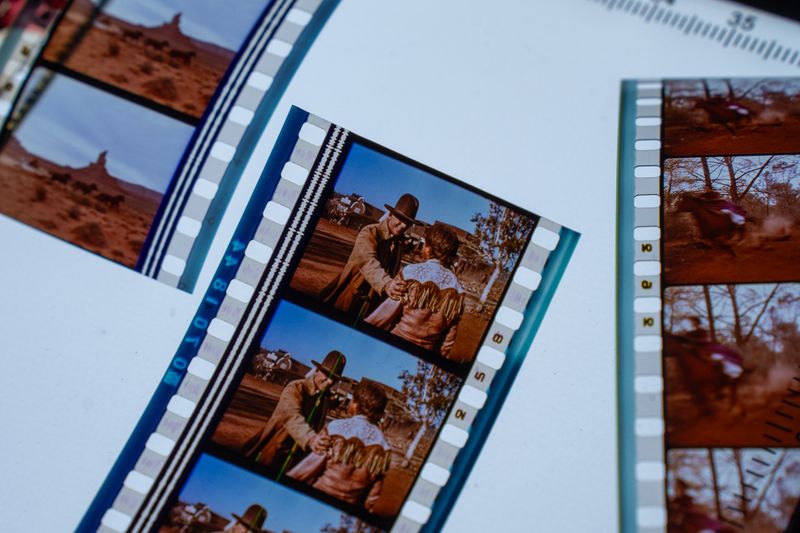
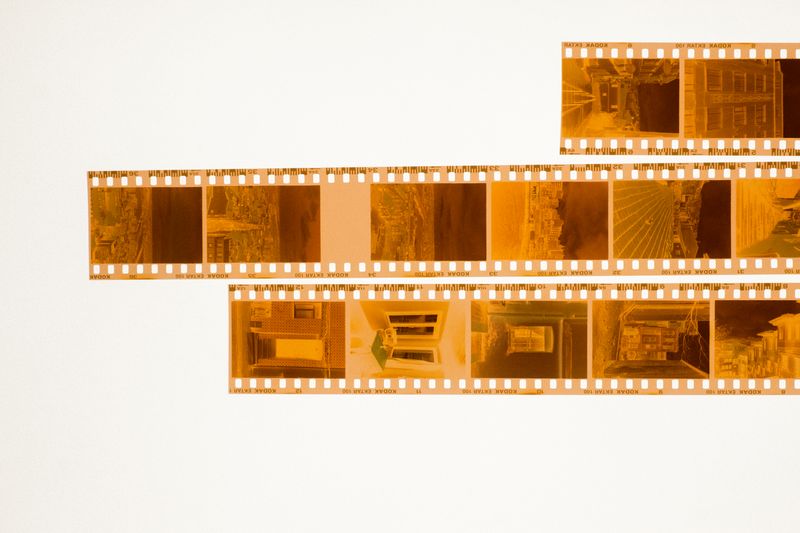
An optical soundtrack is a narrow band running down one side of the film in which the audio waveform is recorded photographically. A lamp shines through it onto a light-sensitive cell in the projector, and variations in the transmitted light become an electrical signal.
Two main approaches existed, one varying the width of a transparent area and the other varying its density, each with different noise characteristics. Because the sound is a photographic image, everything that damages a photograph damages the sound in directly audible ways. This is why old prints hiss, crackle and pop in a manner quite unlike any magnetic or digital degradation.
The track runs ahead of the picture
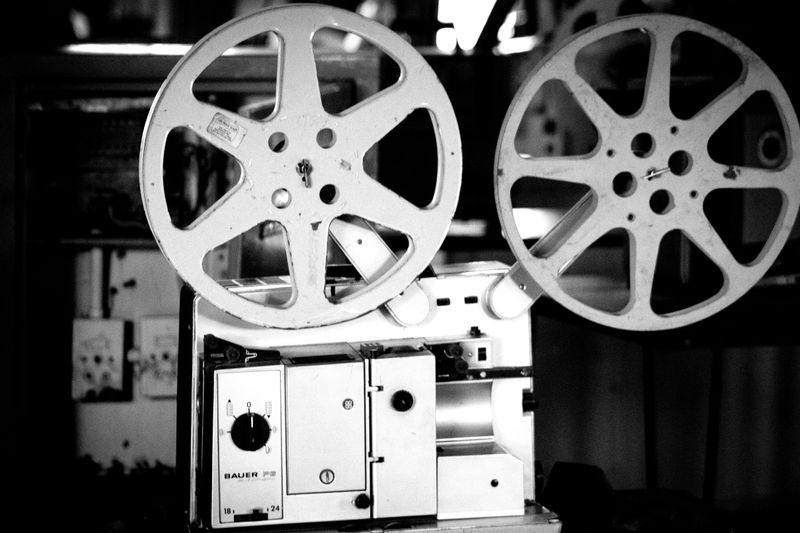
Sound is printed a fixed distance in advance of the corresponding frames because the picture is advanced intermittently and the sound must move smoothly. The projector therefore reads the soundtrack at a different point in its path from the one where the image is projected.
Any error in that offset produces the familiar experience of dialogue arriving slightly before or after the mouth that speaks it. Splices made during repair can disturb this relationship if material is removed from picture and track unequally. A print that has been repaired many times over decades accumulates these faults, which is one reason archival prints are handled sparingly.
Dynamic range was the persistent limitation
Optical tracks carried a restricted range between the quietest usable signal and the loudest undistorted one, which shaped how films were mixed. Noise reduction systems developed later widened that range considerably and require correct decoding to sound as intended. A print carrying encoded sound played without the matching decoder sounds wrong in a specific way that is easy to mistake for damage.
On screen, archives therefore record what encoding a print carries, because playing it incorrectly produces a misleading impression of the original. Mixes of the period were made in full knowledge of these limits, which is why dialogue sits so prominently in older soundtracks.
Magnetic and digital tracks changed the object
Magnetic stripes applied to release prints offered better quality and were physically fragile, wearing measurably with each pass through a projector. Later digital soundtracks were printed as data in the spaces between or beside the perforations, alongside an optical track kept as a fallback.
In practice, that redundancy was deliberate, since a scratched digital track fails abruptly while an optical one degrades gradually and remains usable. Preservation of magnetic material has its own urgency, because the binder holding the oxide can deteriorate and requires treatment before playback.
Each generation of technology therefore left archives with a different and incompatible conservation problem.
Restoring sound is a separate discipline
Cleaning an optical track means addressing photographic damage, which can be done physically, digitally or both, and each choice affects the result. Noise reduction applied aggressively removes hiss along with detail, producing a track that is quieter and duller than the original ever was.
Where several prints survive, comparing them allows damage on one to be replaced with clean material from another. Documented restorations record what was removed and from what source, which allows later workers to reassess the decisions. The temptation to produce a modern-sounding result is strong and is generally resisted by archives for the same reasons it is resisted in picture work.
What this means for what you hear
A film heard from a worn print, a broadcast copy and a restored transfer can differ substantially in balance, noise and clarity. None of those is automatically the authentic version, and the restored one is an interpretation supported by evidence. Contemporary reissues sometimes present remixed versions alongside the original, which is the same labelling principle applied to sound.
Watched twice, where only a remix is offered, the original mix can effectively disappear from circulation despite surviving physically. Asking which mix a release contains is a reasonable question that catalogue entries frequently fail to answer.
The takeaway
Ask which mix a release carries. Surviving physically is not the same as being available.
Watch the transitions. That is where the argument of a film usually is.
Questions readers ask
Why does the sound on old prints crackle?
Because the soundtrack is a photographic image. Scratches, dirt and emulsion damage are read by the projector as signal, so physical damage becomes audible noise.
Why is sound sometimes out of sync on an old print?
The track is printed a fixed distance ahead of the matching frames. Repairs that remove material unequally from picture and track disturb that offset permanently.