Craft
Cars Are Towed More Often Than They Are Driven
Most driving scenes are shot with the vehicle mounted on a rig and pulled by a truck, because a performing actor cannot safely control a car while acting.

A conversation in a moving car is usually filmed with nobody driving. The vehicle sits on a trailer or a tow rig, pulled by a truck that carries the camera, the crew and the lights.
An actor cannot act and drive at once
Driving requires attention that performance also requires. An actor delivering a scene while genuinely steering is either a worse driver or a worse actor, and often both.
Insurance underwriters take the same view. Productions are covered on the assumption that hazardous operation is handled by trained personnel rather than by the cast.
Towing removes the conflict. The performer sits behind a wheel that is not connected to anything urgent, and a stunt driver in the tow vehicle handles the road.
The rig determines what the camera can do
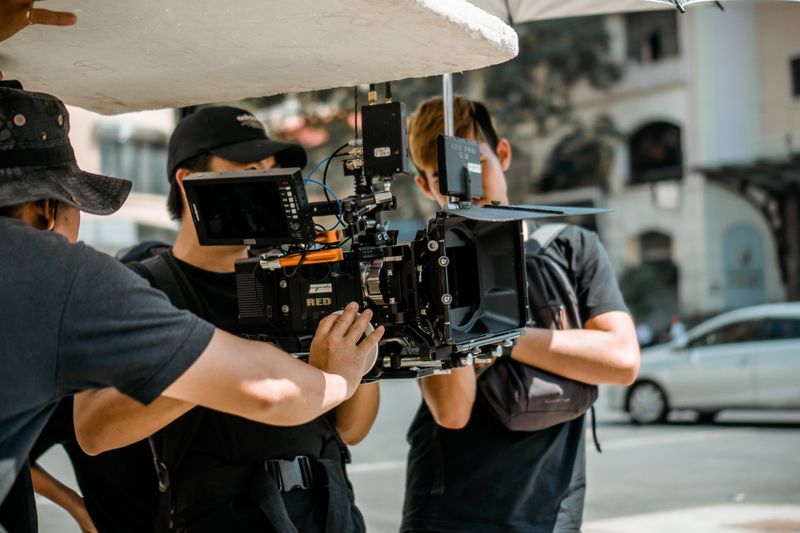
A low-loader carries the picture car on a flatbed, raising it above road height and giving the crew a platform to stand on. Cameras, lights and a monitor ride alongside.
A tow rig instead leaves the car on its own wheels and attaches an A-frame to the front. It sits lower and looks more natural, but there is less room for crew.
Camera positions are then built onto the car itself with suction mounts and speed rail. The hood mount looking back through the windshield is a fixture of American road movies for that reason.
Lighting a moving car is a continuity problem
Interiors need consistent exposure, but a real drive changes light every few seconds as the car passes buildings, trees and overpasses. That variation will not cut together.
So the rig carries its own lighting: soft sources rigged forward of the windshield, and units on the trailer creating the passing flicker deliberately and repeatably.
The background is often controlled too, by choosing a route that stays consistent or by replacing the windows in post-production with plates shot separately.
Sound benefits more than anything else
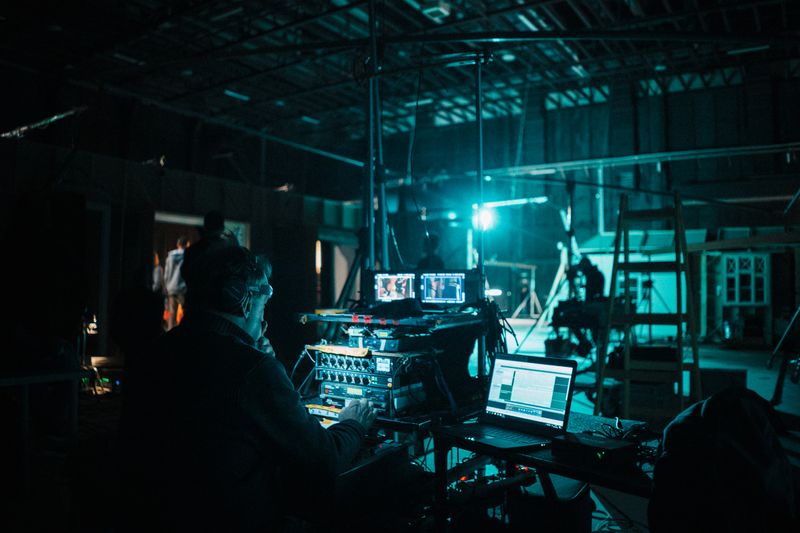
A real engine and real road noise sit directly under the dialogue, and the microphone cannot be placed far from either. Recording usable lines in a genuinely driven car is difficult.
Towing lets the picture car's engine stay off. The noise moves to the tow truck ahead, away from the microphones, and the interior becomes something close to a quiet room.
Engine sound, tire noise and passing traffic are added later from libraries and dedicated recordings. What you hear was assembled to match the picture rather than captured with it.
Process work never fully went away
Older films used rear projection: the car parked on a stage with moving footage behind it. The look is instantly recognizable and was abandoned as it began to read as artificial.
The modern version is a parked car surrounded by video walls playing a real drive, which lights the interior with the scene it is showing.
Either way the principle holds. The safest place to shoot a car chase conversation is somewhere the car is not actually going anywhere.
Questions readers ask
Does replaced dialogue mean the original performance was bad?
Usually not. The most common cause is uncontrollable location noise, and the aim is to preserve the take that worked visually.
Why do dubbed versions sometimes say different things from the subtitles?
Dubbing has to fit mouth movements and timing; subtitles have to fit reading speed. Each compromises differently, so they diverge legitimately.