Craft
Magic Hour Is Twenty Minutes And The Schedule Knows It
The warm, low light before sunset lasts a short and shrinking window, so scenes that depend on it are planned as a series of single attempts across several days.

The soft directional light photographers call magic hour lasts far less than an hour. Any scene that depends on it is planned around a window that cannot be extended.
Why the light is worth the trouble
When the sun sits low, its light passes through more atmosphere, arriving warmer, softer and from the side. Faces are modelled rather than flattened.
The sky behind also holds usable brightness, so a subject can be exposed without the background blowing out. Midday sun offers neither of those advantages.
Artificial equivalents exist, but reproducing a light source that fills an entire landscape is expensive, and beyond a certain scale it is simply not possible.
The window is short and moving
Usable light changes minute by minute, and it shifts earlier or later through the year and by latitude. Near the equator it collapses to a very brief transition.
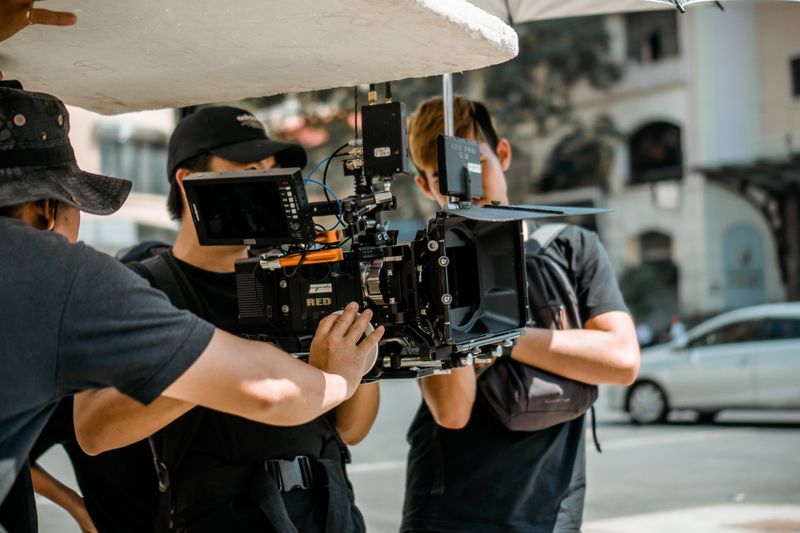
Crews therefore rehearse in ordinary light and hold the camera ready, shooting only when conditions arrive. Everything that can be prepared in advance is prepared.
Even then a scene rarely completes in one evening. It is planned as several consecutive days, each contributing a few takes at the same time of day.
Continuity becomes the hard problem
Light shot on Monday and Wednesday will not match unless both evenings were clear, so weather cover and grading allowances are built into the plan.
Shadow direction is the visible tell. Two shots recorded twenty minutes apart can have noticeably different shadow angles, which reads as a jump when cut together.
Script supervisors and camera crews log exact times so that a return day can reproduce the conditions rather than approximate them from memory.
Scheduling a scene like this costs elsewhere
Holding a full crew all day to shoot twenty minutes is expensive, so productions usually schedule other work nearby and move to the magic hour setup at the last moment.
That neighbouring work has to be interruptible, which limits what it can be. Complex effects or stunts cannot be paused mid-setup for the light.
The alternative is a smaller unit shooting only the magic hour material, which is cheaper but requires the sequence to be separable from the rest of the day.
The look can be extended, not invented
Grading can push an ordinary evening warmer, and digital skies can replace a flat one. Neither reproduces the way low sun wraps around a face.
What can be extended is the tail of the window. Material shot slightly after the light has gone can often be lifted to match, buying a few extra minutes.
Which is why the decision to shoot magic hour is made in preparation. It changes the shape of the schedule, and no later process recovers the look for free.
Questions readers ask
Does replaced dialogue mean the original performance was bad?
Usually not. The most common cause is uncontrollable location noise, and the aim is to preserve the take that worked visually.
Why do dubbed versions sometimes say different things from the subtitles?
Dubbing has to fit mouth movements and timing; subtitles have to fit reading speed. Each compromises differently, so they diverge legitimately.