Craft
Storyboards Settle Arguments Before The Crew Arrives
Boards and previs exist to move disagreements about coverage, geography and cost into a room where changing your mind is cheap rather than ruinous.
Storyboarding is described as visualising a scene, which undersells it. Its real function is to force decisions at the point where reversing them costs a morning rather than a day.
The cost of a decision rises steeply
Changing a shot during preparation costs a conversation. Changing it on the day costs a crew standing still, and changing it after the shoot may cost a return to the location.
Boards pull the argument forward into the cheap period. Everything that can be resolved on paper is resolved there, deliberately and in advance.
This is why sequences with heavy effects, stunts or crowds are boarded in detail while a two-hander in a kitchen frequently is not. The saving scales with the complexity.
Boards are a document that other departments read
The construction team learns which walls appear on camera and which can be left unbuilt. The costume department learns whether a character is seen full length or from the chest up.
Special effects learn how many resets a sequence needs. Each of those readings turns into a budget line, which is why boards circulate widely rather than staying with the director.
A change to a board therefore triggers a chain of adjustments. Late redrawing is disruptive precisely because so many schedules are derived from it.
Previs adds time to the picture
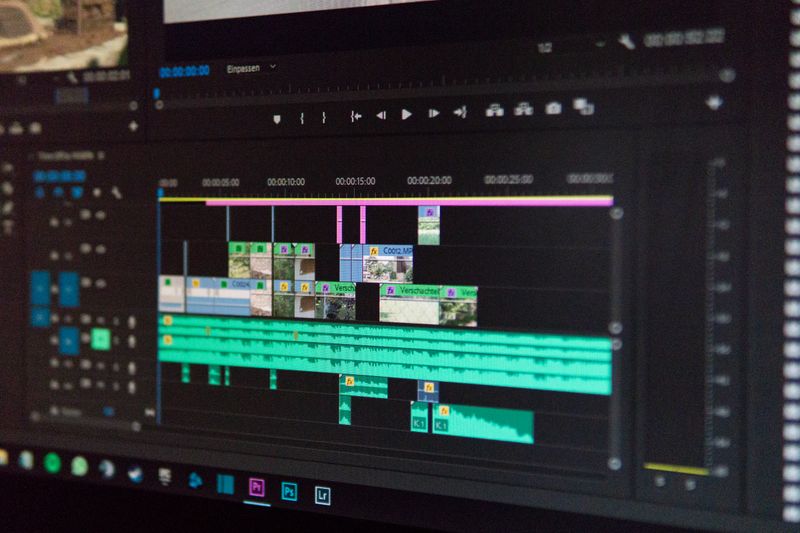
Animated previsualisation puts rough versions of the shots into a timeline with real durations. That reveals a problem drawings cannot: whether the sequence actually plays.
Lens choice, camera speed and the length of a move can all be tested before anything is built. A crane move that reads well on paper may take too long to perform.
Because it is cut together, previs also gives the editor a placeholder. Missing sequences can sit in an assembly while the surrounding film is judged.
Technical previs is a build instruction
On complex work the previs is measured, so a virtual camera position becomes a real crane arm, a track length and a stage footprint the production has to supply.
Effects vendors use it to plan how a shot will be created, and to say what must be photographed on the day for their work to be possible.
At this point the previs stops being a sketch and starts behaving as a specification, with changes managed as carefully as changes to a set drawing.
The board is a starting position, not a contract
Directors depart from boards constantly once the actors are in the space, because performance suggests things a drawing cannot anticipate.
The value survives the departure. A crew that understands the intended shape can improvise inside it without losing the coverage the edit will need.
The failure mode is the opposite: shooting a board slavishly, ending up with exactly what was drawn and nothing that responds to what actually happened on set.
Questions readers ask
Does replaced dialogue mean the original performance was bad?
Usually not. The most common cause is uncontrollable location noise, and the aim is to preserve the take that worked visually.
Why do dubbed versions sometimes say different things from the subtitles?
Dubbing has to fit mouth movements and timing; subtitles have to fit reading speed. Each compromises differently, so they diverge legitimately.