Craft
The Location Sound Mixer Is Fighting The Room
Production sound is a battle with reflections, refrigerators and traffic. The recordist's decisions on set determine how much dialogue survives without being replaced later.

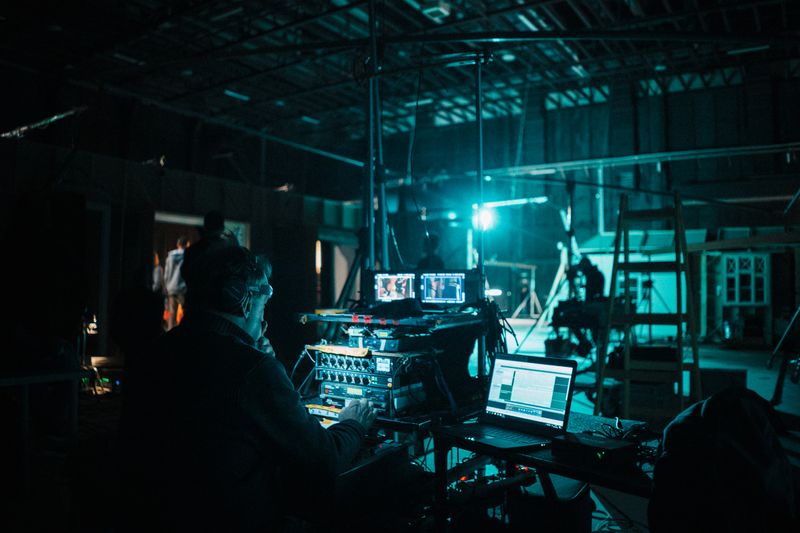
A production sound mixer's job is to capture dialogue that can be used unaltered. Most of the work is not recording but removing everything competing with the voice.
Rooms colour voices before microphones do
Hard walls, glass and bare floors reflect sound back, so a microphone captures the line twice: directly, and again as a smear arriving fractionally later.
That reflected energy cannot be removed afterwards in any convincing way. It is baked into the recording along with the performance.
So crews dress rooms with soft material out of frame, lay carpet under camera positions and choose microphone angles that favour the actor over the wall behind them.
The boom is preferred for a reason
A microphone on a pole above the actor sits close to the mouth and points away from most of the room, which gives the cleanest and most natural result.
It also requires an operator to track movement precisely while staying out of frame and out of the light, adjusting for every change in blocking.
Radio microphones hidden in costume are the backup, useful for wide shots and movement, but they pick up fabric rustle and sit closer to a chest than an ear expects.
Continuous noise is the real enemy
Refrigerators, air conditioning, fluorescent fittings and distant traffic create a steady bed under everything. It is not loud, but it changes between setups.
Steady noise is also what makes cutting difficult, because the background shifts audibly at every join even when the dialogue matches perfectly.
Recordists therefore ask for buildings to be shut down during takes, which costs time and cooperation, and is one of the quieter negotiations of any shooting day.
What gets recorded beyond the lines
Room tone is captured for every location: a stretch of the space with nobody speaking, used later to fill gaps so silence sounds consistent.
Wild lines are recorded when a delivery was right but the take was spoiled, giving the edit a clean version without a full replacement session.
Notes go to post as well, flagging which takes are compromised and why, so the editorial team knows early which scenes are likely to need re-recording.
The set decides how much has to be replaced
Every scene that cannot be salvaged returns as replacement dialogue, which costs actor availability and rarely matches the energy of the original performance.
Productions that protect sound in preparation, by choosing quieter locations and allowing time for shutdowns, spend far less on that recovery.
The trade is visible in the schedule: a slightly slower shoot in exchange for a soundtrack that is largely the performance the actors actually gave.
Questions readers ask
Does replaced dialogue mean the original performance was bad?
Usually not. The most common cause is uncontrollable location noise, and the aim is to preserve the take that worked visually.
Why do dubbed versions sometimes say different things from the subtitles?
Dubbing has to fit mouth movements and timing; subtitles have to fit reading speed. Each compromises differently, so they diverge legitimately.