Archive
A projectionist used to be running a live performance
Presenting a film on film required continuous manual work, judgement and repair. Automation removed the labour and, with it, a set of decisions nobody now makes.
Both approaches to film projection work. What differs is what they cost you, and the cost is what this sets out.
The difference in one place
- Reel changeovers required two machines and precise manual timing.
- Focus, framing and sound level were adjusted during the show, not preset.
- Prints degrade with every pass, so a late-run print differs from an opening-night one.
The show was operated, not played
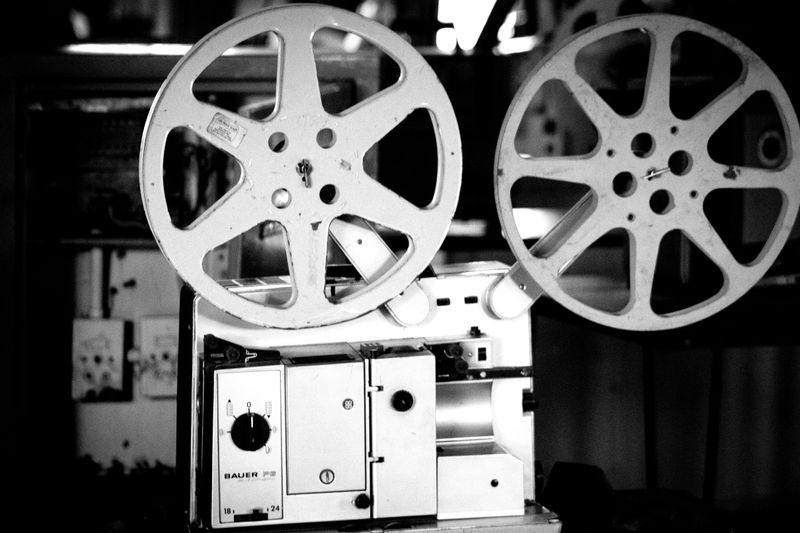
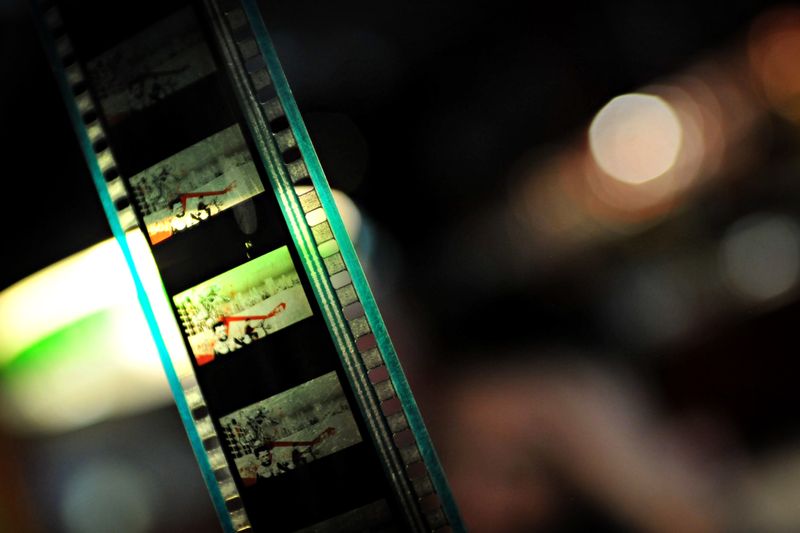
A feature arrived as several reels, each running roughly twenty minutes, which had to be presented as one continuous experience. Two projectors were threaded and run alternately, with the operator starting the second machine and switching between them at marked cues. Small circular marks in the corner of the frame signalled the changeover, and a mistimed switch produced a visible break in front of an audience.
Between changeovers the operator rewound, inspected and rethreaded, so the work continued throughout the running time. The job was a live technical performance repeated several times a day with no opportunity to correct an error afterwards.
Judgement was applied continuously
Focus drifts as film heats in the gate, so an attentive operator adjusted it during the show rather than setting it once. Framing could shift, sound level had to suit the audience size and the auditorium, and lamp alignment affected brightness across the screen. A print arriving damaged required repair before it could be shown, which meant splicing under time pressure and losing a frame or two.
By the second act, these decisions were made by someone watching the actual presentation, which is a form of quality control that no longer exists in most venues. Filmmakers who visited cinemas to check presentation were checking exactly this.
Platters and automation changed the economics
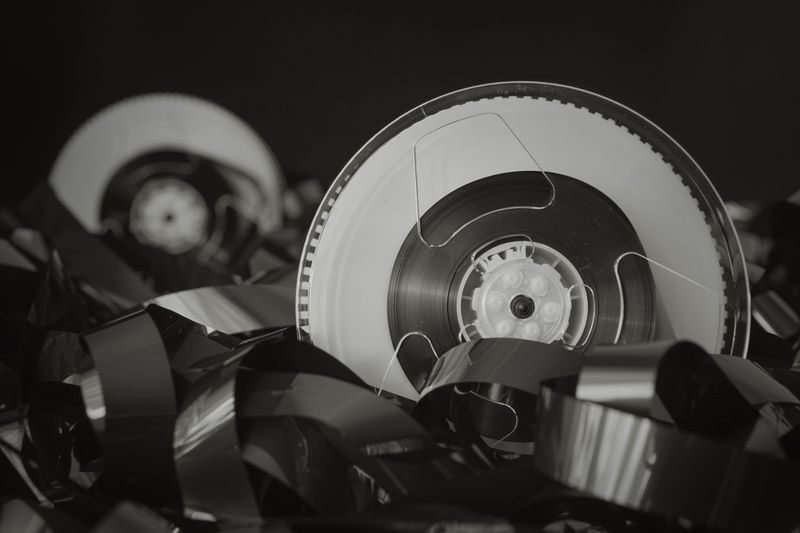
Assembling a whole feature onto a single large horizontal platter removed changeovers and allowed one operator to run several screens. That directly enabled the multiplex, since staffing no longer scaled with the number of auditoriums.
By the second act, the trade was mechanical risk, because a fault in the platter path could damage an entire feature rather than one reel. It also removed the routine inspection that threading each reel had previously forced. The role shifted from operating a show to monitoring several, and then largely to responding when something failed.
Prints wore out visibly during a run
Every pass through a projector abrades the film slightly, and dust, splices and mechanical faults accumulate across weeks. A print at the end of a long run therefore looked measurably worse than the same print on its first day. Scratches running the length of the frame indicate a fault in the machine rather than in the material, and an alert operator caught them early.
In practice, cinemas returned or destroyed prints after a run, and copies that escaped that process are part of what archives now hold.
Judging an older film from a heavily worn print is therefore judging an object with its own history.
Digital changed the failure modes
A digital presentation is consistent from the first show to the last, which removes wear entirely and removes variation with it. Failures became binary, so a fault produces a black screen rather than a gradually degrading image. Content is delivered as encrypted files with time-limited keys, which means a technical problem with authorisation can stop a show for reasons unrelated to equipment.
Brightness, colour and sound are set by calibration and drift if calibration is not maintained, which is a maintenance discipline rather than a live one. Where that maintenance lapses, presentations degrade quietly and nobody in the building is watching the screen for it.
This reads the finished film, which is not the same as reading the intention.
The skills persist where the format does
Repertory venues and archives that show prints still require trained operators, and the number of such people is small and ageing. Training is increasingly informal, passing between individuals rather than through any structured programme. Equipment maintenance is a related constraint, since parts and technicians for older machines are becoming genuinely scarce.
Some institutions have made preserving projection capability an explicit part of their remit, treating the equipment as heritage. Without that, holding a print becomes meaningless in practice, since nothing would remain that can show it.
Side by side
| Consideration | What it means in practice |
|---|---|
| The show was operated, not played | Reel changeovers required two machines and precise manual timing. |
| Judgement was applied continuously | Focus, framing and sound level were adjusted during the show, not preset. |
| Platters and automation changed the economics | Prints degrade with every pass, so a late-run print differs from an opening-night one. |
The takeaway
Keeping a print is only meaningful if somebody can still thread it.
The trailer sells a premise. The film has to survive its own middle.
Questions readers ask
What were the dots in the corner of the frame?
Changeover cues. They told the projectionist when to start the second machine and when to switch, so a multi-reel feature played as one continuous show.
Do prints get worse during a cinema run?
Yes. Every pass abrades the film and accumulates dirt and splices, so a print at the end of a long run is visibly worse than on its first day.