Archive
Half the work in an archive is establishing what the film even is
A large proportion of surviving material arrives unlabelled, mislabelled or in fragments. Identifying it is detective work with real consequences for what can be saved.
The options around identifying unlabelled footage are set out side by side below, with the conditions that genuinely favour one over the other.
The difference in one place
- Edge markings on film stock can date manufacture but not necessarily use.
- Fragments are identified through content, technique and comparison with catalogues.
- Unidentified material cannot be prioritised for conservation funding.
Material arrives without a name
Collections reach archives from studios that closed, distributors that folded, projectionists who kept things and families clearing houses. Cans are frequently labelled with a title that belongs to whatever was previously inside them, which is worse than no label at all.
Fragments without heads or tails carry no titles, and a few hundred feet of unmarked film gives very little to work from. Until the material is identified it cannot be catalogued, and until it is catalogued nobody can request it or fund its treatment. Identification is therefore the gateway to every other kind of care an archive can provide.
The film itself carries evidence
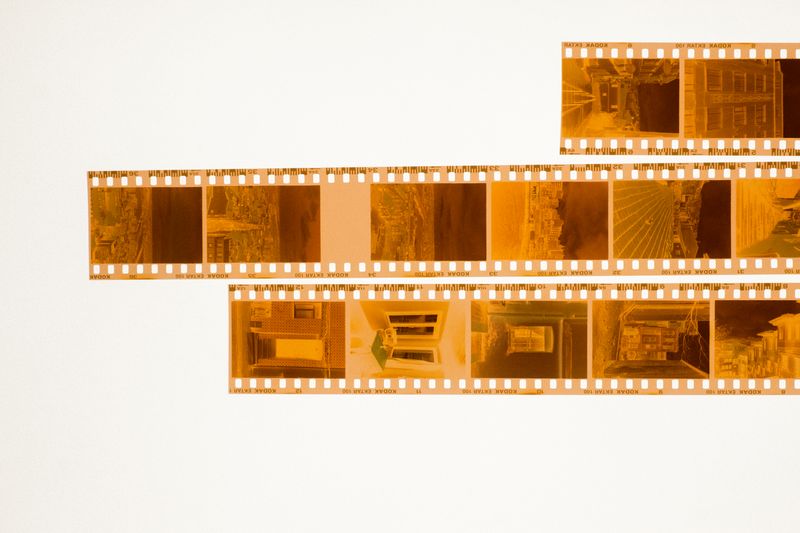
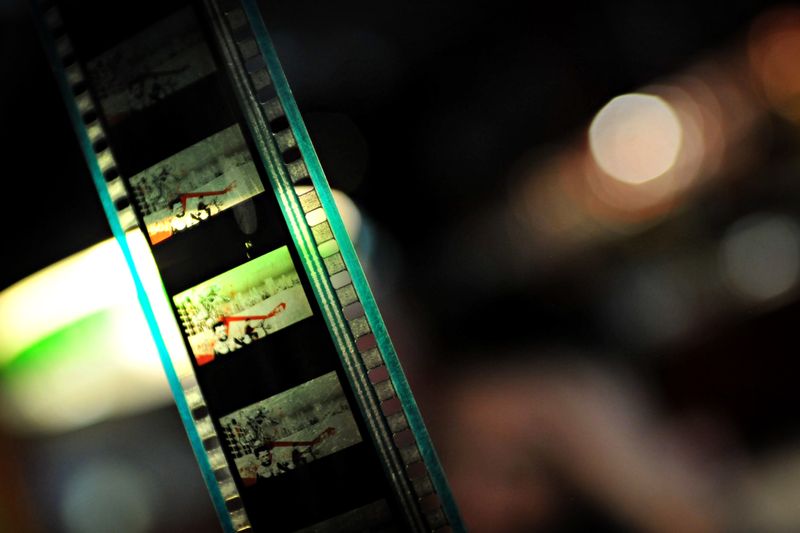
Manufacturers printed edge markings recording stock type and often a date code, which establishes when the film base was made. That gives an earliest possible date for the copy, though not necessarily for the production, since a print can be struck decades after a film was shot. Perforation shape, frame dimensions, sound track presence and gauge all narrow the period and the intended use.
Splices, wear patterns and projectionist markings indicate how heavily a print was used and sometimes where. None of this identifies a title, but together it constrains the search enough to make it feasible.
Content is compared against records
Researchers look for recognisable faces, locations, vehicles, signage, fashion and any on-screen text that can be dated or placed. Trade papers, censorship registers, distribution catalogues and surviving publicity provide descriptions detailed enough to match against.
Comparison with other holdings is often decisive, since a fragment may match a sequence in a known incomplete copy elsewhere. International cooperation matters here as much as it does in reconstruction, because the matching copy is frequently in another country. Published stills and press books have identified a substantial amount of otherwise anonymous material.
Crowds can help, carefully
Making unidentified material publicly viewable has repeatedly produced identifications from viewers who recognise a street, a building or a relative. Local history groups are particularly effective at placing non-fiction footage that no film specialist could locate. Claims arriving this way require verification, since confident misidentification is common and propagates quickly once recorded.
Archives generally record the evidence for an identification alongside the identification itself for exactly this reason.
The practice has moved from occasional to routine and has substantially increased the rate at which backlogs are reduced.
Why it decides what gets saved
Conservation resources are allocated against significance, and significance cannot be assessed for material nobody can name. Grant funding almost always requires a description of what is being preserved, which unidentified holdings cannot supply.
On screen, material therefore sits untreated not because anybody judged it unimportant but because nobody could make the case. Decay continues throughout, so identification delayed is sometimes identification of something no longer recoverable. This is the practical reason archives invest staff time in cataloguing that looks like administration from outside.
Craft credits are collaborative, and attributing a choice to one department oversimplifies it.
The record of a wrong answer matters
Misidentifications enter catalogues, get copied into other databases and become extremely difficult to remove once circulated. Good practice records confidence levels and the reasoning behind an attribution rather than stating it flatly.
In the edit, revisions are published rather than quietly applied, so anyone relying on an earlier version can discover the change. This discipline is well established in archival practice and largely absent from the commercial catalogues that reuse archival data. A description carried confidently for decades can turn out to rest on one person’s guess in a card index.
Side by side
| Consideration | What it means in practice |
|---|---|
| Material arrives without a name | Edge markings on film stock can date manufacture but not necessarily use. |
| The film itself carries evidence | Fragments are identified through content, technique and comparison with catalogues. |
| Content is compared against records | Unidentified material cannot be prioritised for conservation funding. |
The takeaway
Naming a reel is not paperwork. It is the step that makes everything else possible.
The trailer sells a premise. The film has to survive its own middle.
Questions readers ask
How do archivists date an unmarked reel?
Edge markings on the stock give a manufacturing date, and gauge, perforations and sound format narrow the period. That dates the copy, not necessarily the production.
Why does unidentified film go untreated?
Because conservation funding requires a description of what is being preserved. Material nobody can name cannot be argued for, so it waits while it continues to decay.