Craft
Miniatures never disappeared, they moved to the shots you cannot spot
Building something small and photographing it remains cheaper and more convincing than simulating it for a whole class of shots. The reasons are physical.
Both approaches to miniatures and practical effects work. What differs is what they cost you, and the cost is what this sets out.
The difference in one place
- Scale models must be shot with adjusted frame rate and depth of field to read as full size.
- Fire, water and smoke do not scale, which limits what a miniature can do.
- Most modern effects shots combine photographed and generated elements.
Scale changes the physics of what you photograph
A model behaves according to its actual size, so debris from a small building falls at the speed appropriate to a small building rather than a large one. The standard correction is to shoot at a higher frame rate and play it back at normal speed, which stretches time and makes the motion read as massive.
The larger the model, the smaller the correction needed, which is why serious miniature work is often built at a substantial fraction of full size. Depth of field is the other giveaway, because a lens close to a small object throws the background soft in a way a distant real building never does. Deep stops and strong lighting solve that, which is one reason miniature stages are hot, bright and unpleasant to work on.
Some elements refuse to scale at all
Fire has a fixed relationship between flame size and speed, so flames on a model always look like flames on a model unless the shot is very short. Water is worse, since droplet size is set by surface tension and a miniature sea reads as a puddle no matter how it is photographed.
By the second act, smoke sits in between and can work if the particle size is controlled and the shot does not linger. These constraints explain the historical division of labour, where hard structures were built and fluid elements were added separately. Modern practice does the same thing digitally, generating fire and water while photographing the solid geometry.
Where a photographed object still wins
A real surface reflects, scatters and dulls light with a complexity that is expensive to simulate convincingly, especially on worn or dirty materials. Lens behaviour comes free with a photographed element, since flare, distortion, chromatic aberration and grain are produced by the same optical path as the rest of the shot.
Destruction of rigid structures is comparatively easy to build and film, because the physics of breaking concrete at scale is well understood by the people who do it. Cost predictability is a real advantage as well, since a model is a fixed build while a simulation can absorb revisions indefinitely. None of this means models are always better; it means there is a category of shot where they remain the efficient answer.
Hybrid shots are now the normal case
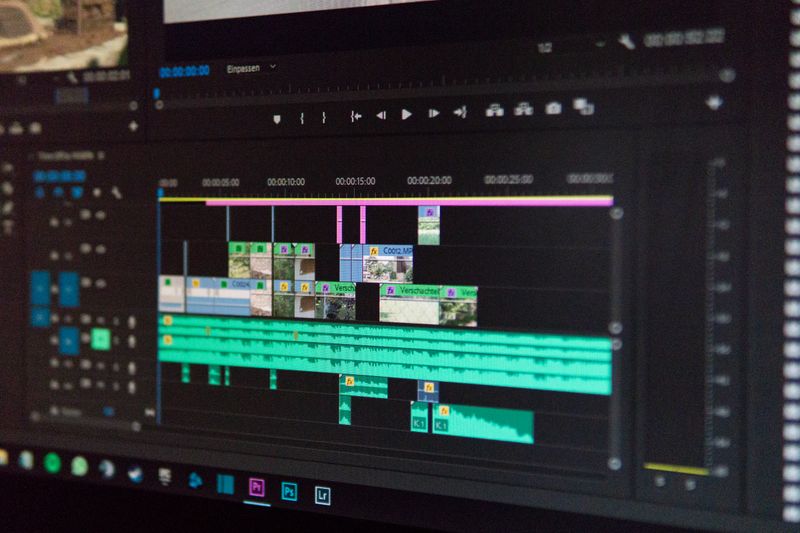
Contemporary sequences routinely photograph a physical element and extend it digitally, or generate an element and add photographed smoke and debris on top. Practical explosions are frequently filmed separately as elements and composited into shots that never had an explosion in front of the camera. Digitally extending a partially built set is so common that audiences see it constantly without any awareness that a boundary exists in the frame.
What the cut is doing: the decision about which method to use is usually made on cost and schedule, not on principle.
Supervisors describe their job as choosing the cheapest route to a believable frame, which rarely means committing entirely to one technique.
The skills are scarce and that changes the calculation
Model building draws on pattern making, moulding, painting and mechanical engineering, and the workshops that concentrate those skills are not evenly distributed. Where a crew with that experience exists, the practical route stays viable; where it does not, the digital route wins by default. Training pipelines for these crafts are thinner than they were, which pushes productions towards methods that can be staffed anywhere.
That is an availability effect rather than an aesthetic verdict, and it is worth separating the two when people argue about which looks better. Several effects houses maintain model shops precisely because losing the capability entirely would remove an option they still use.
Craft credits are collaborative, and attributing a choice to one department oversimplifies it.
What audiences actually respond to
The persistent claim that practical effects feel more real is partly about method and largely about how the shot was lit, framed and cut. A photographed element sitting in a badly composited frame looks worse than a well-integrated generated one, and the reverse is equally true.
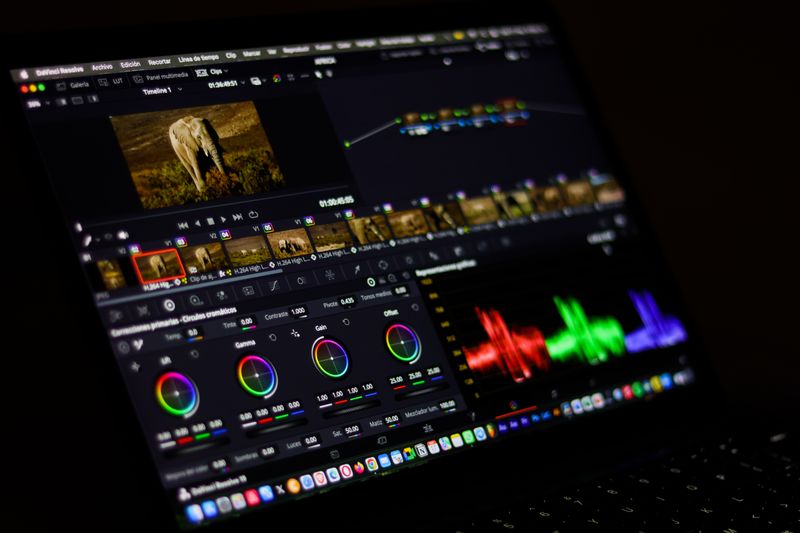
Watched twice, what reads as convincing is consistency, meaning that everything in the frame appears to have been photographed through the same lens under the same light. Short shot lengths hide weaknesses in both methods, which is why difficult effects tend to be cut fast regardless of how they were produced. The useful question is never which technique was used, but whether the frame holds together when you are allowed to look at it.
Side by side
| Consideration | What it means in practice |
|---|---|
| Scale changes the physics of what you photograph | Scale models must be shot with adjusted frame rate and depth of field to read as full size. |
| Some elements refuse to scale at all | Fire, water and smoke do not scale, which limits what a miniature can do. |
| Where a photographed object still wins | Most modern effects shots combine photographed and generated elements. |
The takeaway
The choice between building it and generating it is a budget decision, not a moral one.
Craft is the part that keeps working after the surprise has gone.
Questions readers ask
Why are miniature shots filmed in slow motion?
Because gravity does not scale. Overcranking and playing back at normal speed stretches the motion so a small object falls with the apparent weight of a large one.
Are practical effects always more convincing?
No. Integration decides it. A photographed element badly composited looks worse than a well-lit generated one, and consistency across the frame matters more than the method.