Craft
The script supervisor is the reason the film still cuts together
One person tracks every prop, glance, line change and screen direction across a shoot that happens out of order. The job is barely visible and load-bearing.
The options around script supervision are set out side by side below, with the conditions that genuinely favour one over the other.
The difference in one place
- Films are shot out of order, so continuity has to be recorded rather than remembered.
- Screen direction and eyelines determine whether coverage will edit together.
- Notes taken on set become the editor's primary map of what exists.
Shooting order is not story order
Scenes are grouped by location, cast availability and daylight, so a character's morning and their final scene may be shot the same afternoon. Every detail that must match — injury state, hair, food eaten, cigarette length, what is in a pocket — has to be logged and reproduced days or weeks later.
No one on set can hold this in memory across a shoot of any length. The record is the only thing that makes the eventual edit possible.
Eyelines and direction decide the edit
If two characters shot separately are not looking in complementary directions, their close-ups will not cut together as a conversation. The script supervisor watches for this in real time and flags it before the crew moves on, because fixing it later means a reshoot. The same applies to screen direction across a journey, where a character travelling left to right must keep doing so or appear to turn around.
These are cheap to prevent on the day and extremely expensive to fix afterwards.
The notes are the editor's map
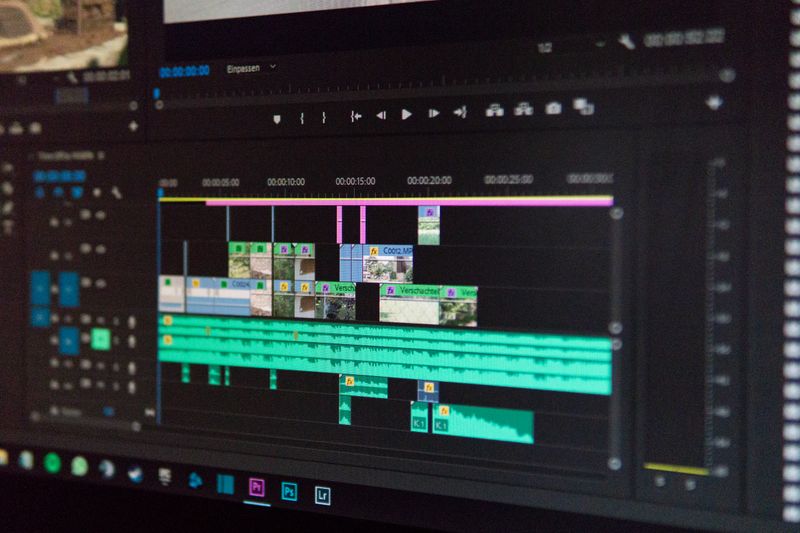
Take-by-take notes record what was covered, which takes the director preferred, where lines changed and what technical problems occurred. An editor starting work receives thousands of takes and relies on this document to navigate them. Missing or careless notes cost days of editorial time and can mean usable material is never found.
This is why the role reports to both the director and the editor and sits between production and post.
Script changes have to be tracked as they happen
Dialogue is altered on set constantly, and the shooting script has to be updated to reflect what was actually said. That record matters for legal clearance, for subtitle and dubbing scripts and for any later replacement of dialogue. It also determines whether a scene has been covered at all, since a rewritten line may have removed the reason a shot existed.
The document produced during the shoot becomes the reference version of the film for everyone downstream.
Timing estimates guide the day
Script supervisors time scenes as they are performed, producing a running estimate of the assembled length. Producers use this to see whether a film is running long while there is still time to do something about it. It is a rough measure and it is the only real-time signal available before an assembly exists.
On screen, long-running productions frequently discover a structural problem this way rather than in the edit.
It is a role built on authority without rank
The job requires interrupting a director or a cinematographer to say a shot will not cut, which depends on being trusted rather than senior. Being wrong repeatedly destroys that standing; being right and silent is worse. It is one of the clearest examples of a craft role whose value is measured entirely in problems that never happened.
The department of one is why the department of two hundred can work out of order.
Side by side
| Consideration | What it means in practice |
|---|---|
| Shooting order is not story order | Films are shot out of order, so continuity has to be recorded rather than remembered. |
| Eyelines and direction decide the edit | Screen direction and eyelines determine whether coverage will edit together. |
| The notes are the editor's map | Notes taken on set become the editor's primary map of what exists. |
The takeaway
The mismatch you spotted was probably a trade someone made knowingly.
The trailer sells a premise. The film has to survive its own middle.
Questions readers ask
What causes visible continuity errors in finished films?
Usually a choice: the best performance take had a mismatch, and the editor accepted a small error rather than a weaker performance. Some are genuine misses, but many are deliberate trades.
Is continuity the same as the script supervisor role?
Continuity is part of it. The role also covers timing, coverage records, script changes and the notes editorial depends on.